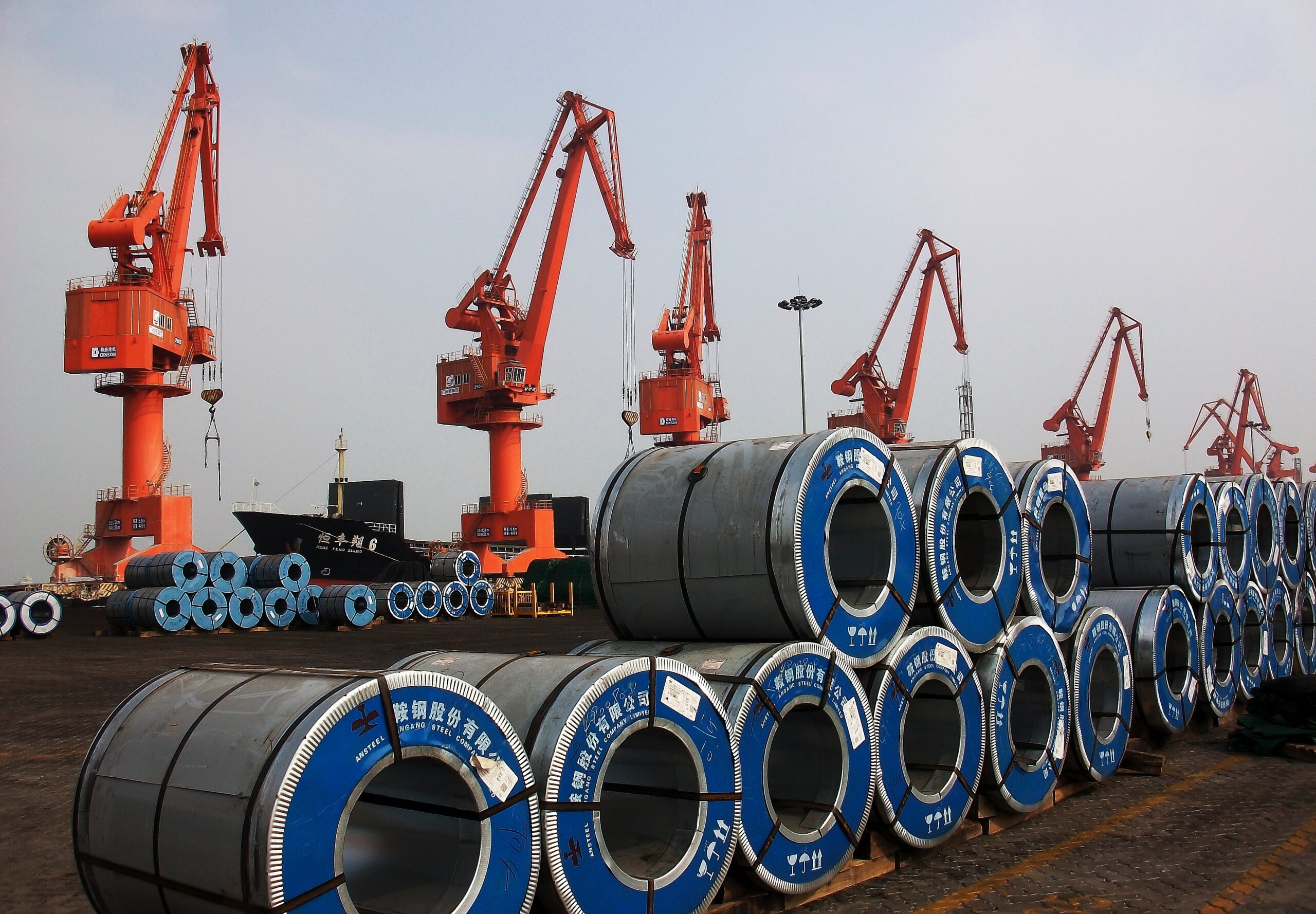
Steel Demand Germany
A wholesale supplier’s view of steel and rebar demand in Germany — the construction, infrastructure and industrial drivers behind it, and how bulk importers secure B500B at mill-direct export prices.
How big is steel demand in Germany?
Germany is the European Union’s single largest consumer of steel, and reinforcing steel sits at the heart of that appetite. The country combines a deep construction sector — residential, commercial and public infrastructure — with an automotive, machinery and energy-transition base that keeps long, flat and reinforcing products in constant circulation. For a wholesale rebar supplier and exporter like Steel Rebar Germany, that scale is what makes Germany one of the most important steel-demand markets in Europe.
On the reinforcing side, demand is concentrated in B500B rebar to EN 10080 and DIN 488, welded mesh, rebar coils for automated cut-and-bend lines, and pre-fabricated bar schedules. German precast plants, builders’ merchants, fabricators and infrastructure contractors absorb large, repeatable tonnages — and because conformity is non-negotiable, that demand flows to suppliers who can guarantee EN 10204 3.1 documentation on every bulk consignment. Our wider supply position is set out on our Germany steel hub.
What is driving German rebar demand
Several structural forces keep reinforcing-steel demand in Germany high and recurring. Understanding them helps bulk buyers plan tonnage and lock in export prices ahead of the build cycle rather than chasing spot material:
- Infrastructure renewal & rail — large public programmes for bridges, rail corridors and transport upgrades consume sustained volumes of reinforcing bar and structural steel.
- Energy transition — wind, grid, hydrogen and industrial decarbonisation projects each carry heavy foundation and structural reinforcement requirements.
- Residential & commercial construction — urban housing and commercial development underpin steady B500B rebar and mesh consumption.
- Precast concrete production — Germany’s strong precast industry runs continuous mesh, coil and cut-and-bend demand for slabs and components.
- Industrial & automotive plant — factory expansion and re-tooling add structural and reinforcing demand on top of construction.
Because these drivers move at different speeds, German demand is best served by a supplier offering flexible bulk lots rather than fixed catalogue volumes — exactly the wholesale model we operate.
What demand means for German steel prices
Strong, cyclical demand interacts with supply-side cost to set German rebar and structural-steel prices. The main qualitative drivers are EU scrap and iron-ore input costs, energy prices (a major factor for German electric-arc and integrated mills), the EU carbon and CBAM framework, safeguard quotas and anti-dumping measures, and the construction-cycle demand discussed above. When demand outpaces regional mill capacity, German fabricators turn to imports to balance supply and control input costs — which is where wholesale export tonnage enters the market.
Because these benchmarks move weekly, we quote against live market data rather than fixed numbers. Track independent European steel-market signals here:
- worldsteel.org — global crude-steel production and demand data.
- SteelOrbis — European rebar, mesh and long-product price benchmarks.
- Fastmarkets — steel and raw-material price assessments.
- Eurostat — official EU foreign-trade and industrial-production statistics.
Meeting German demand: bulk supply from Steel Rebar Germany
We are a wholesale reinforcing-steel supplier and exporter, not a broker. When German demand needs covering at volume, precast plants, merchants, fabricators and contractors buy from us in bulk at mill-direct export prices — no middlemen, no marked-up trading layers. Every order ships with full documentation for German building-code conformity, so demand can be filled without compromising on standards.
How import demand reaches Germany
Where domestic demand outstrips regional mill output, imported reinforcing and long steel enters Germany through its North Sea gateways before moving inland on Europe’s densest rail and barge network — above all the Rhine corridor — to fabrication hubs. The principal German steel-import gateways are the Port of Hamburg (largest deep-sea hub), Bremerhaven / Bremen (break-bulk and project cargo), Wilhelmshaven (JadeWeserPort) (Germany’s only deep-water container port) and Duisburg (the world’s largest inland port, distributing into the Ruhr). For bulk wholesale buyers, we ship to the German port of your choice and coordinate documentation so steel clears customs and moves inland without delay.
Verify German steel-demand & trade data
Check production, construction and foreign-trade statistics, import classifications and standards for Germany directly at the responsible federal authorities and port operators below — the same official sources German importers rely on.
- Federal Statistical Office (Destatis)National statistics office — official production, construction and foreign-trade statistics for Germany.destatis.de
- German Customs (Zoll)Central customs authority — import tariffs, EORI registration, anti-dumping measures and HS classification for steel.zoll.de
- Federal Ministry for Economic Affairs & Climate Action (BMWK)Germany’s industry, trade and economic-policy authority — industrial strategy and steel policy.bundeswirtschaftsministerium.de
- DIN — German Institute for StandardizationNational standards body — DIN 488 reinforcing steel and the German adoption of EN steel standards.din.de
- Port of HamburgGermany’s largest universal seaport — the primary steel-import gateway for Northern Europe.hafen-hamburg.de
- bremenports — Bremen & BremerhavenPort authority for Bremen and Bremerhaven — a major break-bulk and project-cargo steel terminal.bremenports.de
Why bulk buyers cover German demand through us
EN 10080 & DIN 488 conformity
B500B reinforcing steel certified to the exact standards German projects require, with CE marking to EN 1090.
EN 10204 3.1 MTC every load
Traceable Mill Test Certificates with heat numbers on every consignment — full documentation for building control.
Mill-direct bulk pricing
Wholesale tonnage at export prices — no broker margins between the mill and your German yard.
Cut & bend to your BBS
Pre-fabricated bar schedules cut and bent to your shop drawings, ready for site — less waste, faster builds.
Shipped to your German port
Direct delivery to Hamburg, Bremerhaven or Wilhelmshaven with documentation handled end to end.
Reliable bulk capacity
Full-truck and full-container supply on repeatable schedules to match recurring German demand.
Rebar specification we supply to Germany
| Property | Specification |
|---|---|
| Grade | B500B (B500A on request) |
| Standard | EN 10080 · DIN 488 |
| Yield strength | 500 MPa min |
| Diameters | 8–40 mm |
| Forms | Straight · Coil · Mesh · Cut&Bend |
| Certification | EN 10204 3.1 · CE / EN 1090 |
Explore more
German steel demand & supply — frequently asked questions
What is the minimum order quantity for bulk rebar to Germany?
What is the lead time to Hamburg or Bremerhaven?
How do you price bulk steel against shifting German demand?
Cover German steel demand at wholesale prices
Send us your tonnage, grades and delivery port — we’ll return mill-direct bulk export prices for Germany.