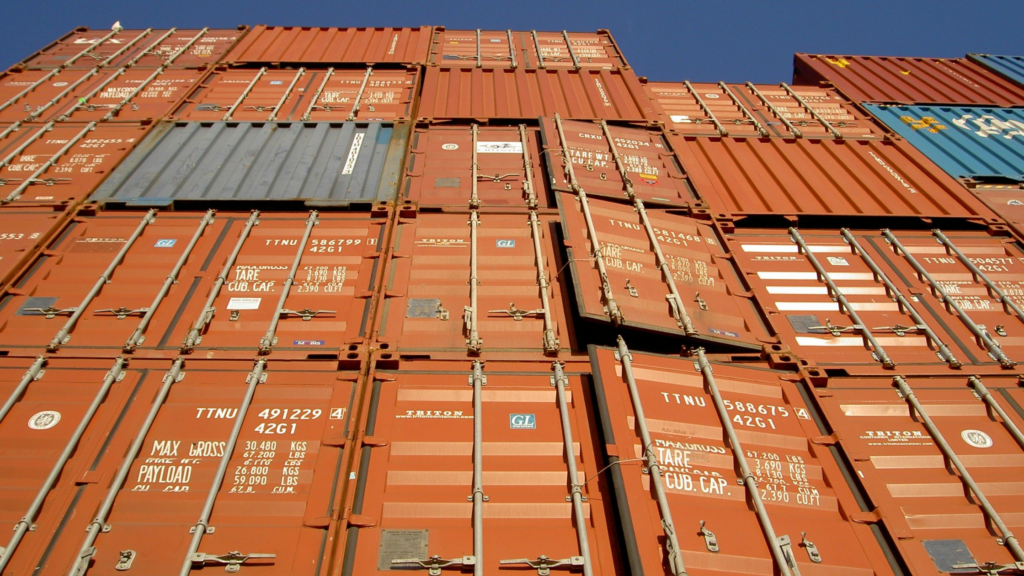
Steel Export Market United Arab Emirates
An exporter’s read on the UAE steel trade — how rebar and steel move in and out through Jebel Ali and Khalifa, what drives bulk export prices, and how to source mill-certified reinforcing steel from Germany at wholesale.
Why the UAE is a steel-trading hub
The United Arab Emirates sits at the centre of Gulf and wider-region steel trade. A near-continuous pipeline of construction, infrastructure, oil-and-gas and free-zone industrial projects across Dubai, Abu Dhabi, Sharjah and the northern emirates keeps reinforcing-bar and structural demand high. At the same time, the country’s deep-water ports and free zones make it a re-export gateway: a large share of the steel landing in the UAE moves onward to neighbouring markets across the Middle East and East Africa.
For a wholesaler, supplier or exporter, that dual character is what defines the UAE export market. The country has a strong domestic production base — led by EMSTEEL (formerly Emirates Steel Arkan) in Abu Dhabi alongside private rolling mills — yet it remains a structural net importer of flat products, specialty grades, billet feedstock and project-specific sections. Bulk rebar buyers, distributors and traders all compete here for reliable mill-certified tonnage. Our full market hub for the country is the UAE steel suppliers page, and product detail sits on our TMT steel rebar and rebar products overviews.
How steel moves through the UAE export market
Import origins are broad. Asian mills — China, India, Japan and South Korea — supply large volumes of flat products and sections, while Turkey, the wider GCC and European producers feed billet, specialty grades and project-specific material. Because the UAE re-exports so heavily, much of that imported steel is then re-shipped through its ports to other markets, which is what gives the export market its scale.
Seaborne cargo concentrates at a handful of gateways. Jebel Ali Port in Dubai — operated by DP World and the busiest port in the Middle East — is the primary container and breakbulk hub. Khalifa Port in Abu Dhabi handles industrial and project cargo, while Port of Fujairah and Khorfakkan on the east coast offer Gulf-of-Oman access that bypasses the Strait of Hormuz, and Hamriyah Port in Sharjah serves the free-zone steel cluster.
For European exporters the typical route runs from North-Sea and Mediterranean ports through the Suez Canal to Jebel Ali or Khalifa. The destination port drives transit time, handling and onward inland delivery, so it should be fixed early in any bulk-order discussion. Neighbouring-market context for traders sits on our Saudi Arabia, Qatar and Oman steel pages.
What drives UAE steel export prices
Export prices into and out of the UAE are shaped by global and regional forces rather than a single local benchmark. The main drivers for bulk buyers and exporters are:
- Raw-material costs — iron ore, scrap and billet feedstock, plus the energy used in electric-arc and rolling operations.
- Construction cycle — project launches and infrastructure spending across Dubai and Abu Dhabi lift rebar and section demand.
- Import competition — Turkish, Asian and GCC offers set the landed-price ceiling that local mills and traders compete against.
- Freight & FX — sea-freight rates, Suez routing and the USD-pegged dirham move landed cost from Europe and Asia.
Because published prices shift week to week, we do not post fixed figures here. For live, verifiable benchmarks track independent reporters such as SteelOrbis and Fastmarkets, alongside global demand data from worldsteel. For a firm delivered export price to a UAE port, request a quotation and we confirm grade, tonnage and freight.
Your wholesale rebar supplier & exporter to the UAE
Steel Rebar Germany supplies UAE importers, contractors, distributors and traders directly — bulk reinforcing steel at export prices, mill-certified and export-ready, with no middlemen.
Bulk B500B / Gr60
Container and breakbulk consignments of B500B and B500A rebar, with Grade 60 (BS 4449 / ASTM A615) equivalents matched for UAE specifications — 8 mm to 40 mm, plus welded mesh, coils, wire rod and cut-and-bend.
Export prices, no middlemen
Direct mill-to-port pricing on bulk orders, with a 3.1 Mill Test Certificate (EN 10204), CE marking to EN 1090 / EN 10080 and full chemical and mechanical data on every shipment.
Shipped to UAE ports
Bulk supply to Jebel Ali, Khalifa and Fujairah with logistics handled end to end, documentation aligned to ESMA / MoIAT conformity. Request a bulk quote →
Verify UAE steel trade data at source
Check regulations, tariffs, standards and statistics through these UAE federal authorities before committing to a bulk shipment or export order.
- Ministry of Industry & Advanced Technology (MoIAT) →Federal industry policy, ESMA standards, conformity and product registration.
- Federal Customs Authority (FCA) →National customs framework, tariff and import procedures for the UAE.
- Federal Competitiveness & Statistics Centre (FCSC) →Official UAE statistics, trade figures and economic data.
- Abu Dhabi Customs →Emirate-level customs clearance and tariff guidance for Abu Dhabi.
For a wider market view, compare neighbouring trade hubs on our Kuwait steel page or browse the full steel by country directory.
UAE steel export questions
What is the minimum order quantity for bulk rebar to the UAE?
What is the lead time to Jebel Ali Port?
How is bulk export pricing set for the UAE?
Source bulk steel for the UAE export market →
Certified B500B / Gr60 rebar, mesh, coils and cut-and-bend at export prices, delivered to Jebel Ali, Khalifa or Fujairah. Tell us your grade and tonnage.