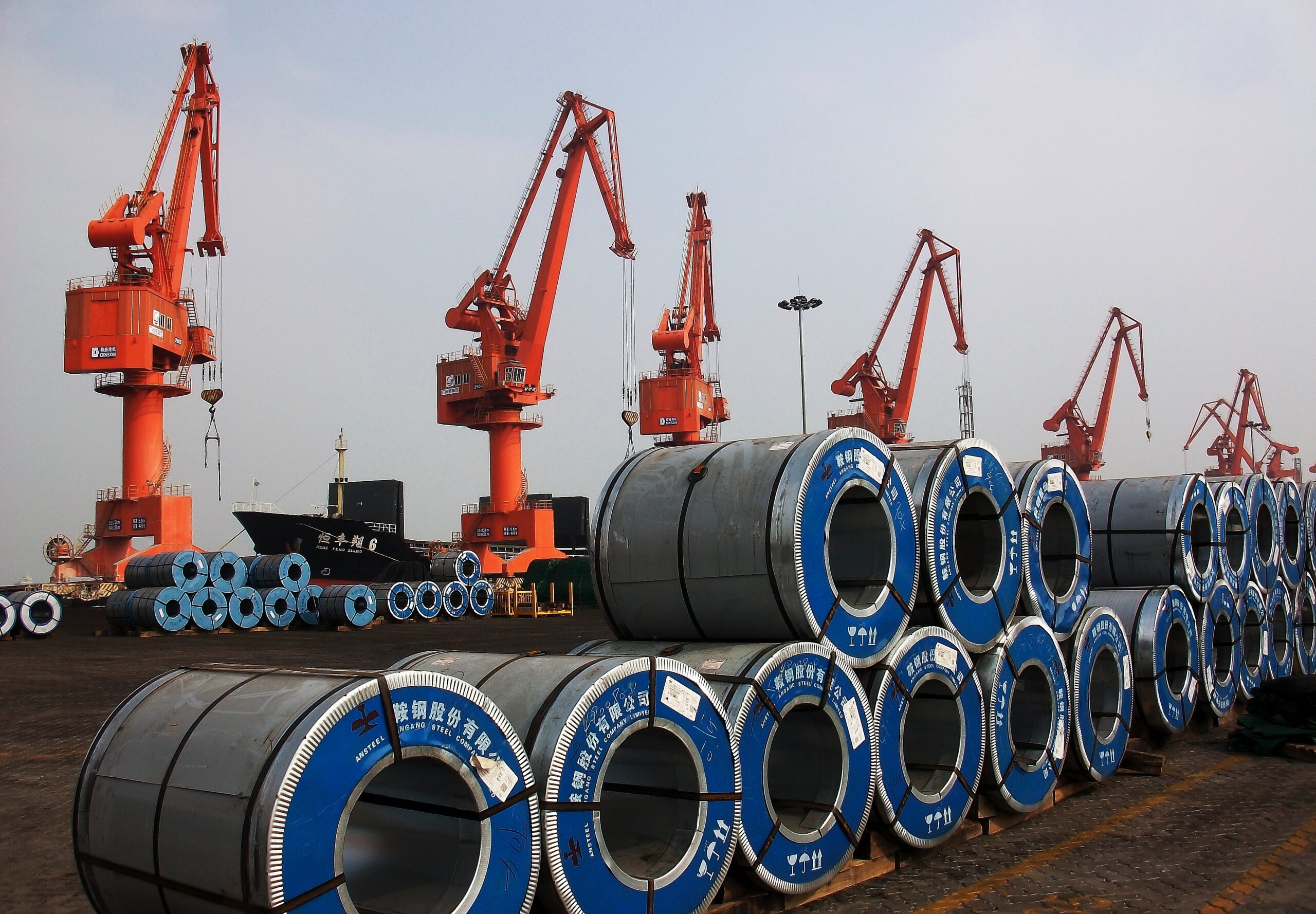
Steel Import Statistics United Kingdom
The United Kingdom is one of Europe’s largest net importers of long steel products. This briefing reads the UK’s official import data the way a procurement team should — and shows how a direct rebar supplier and exporter fits your bulk programme.
Why import statistics matter to UK steel buyers
For any merchant, fabricator or contractor sourcing reinforcement, steel import statistics for the United Kingdom are more than economic trivia. They reveal how dependent the market is on overseas mills, which trade lanes carry the most tonnage, and where price pressure tends to originate. The UK produces a meaningful share of its own long products, but domestic rolling capacity has narrowed over the past decade, leaving rebar, mesh and coil supply increasingly reliant on imports from European and global suppliers. Reading that data well is the difference between a reactive buyer and a strategic one.
As a wholesale rebar supplier and exporter, Steel Rebar Germany works with UK distributors who treat these numbers as a planning tool. When import volumes rise and lead times stretch, buyers who already hold a framework agreement with a direct mill-backed exporter avoid the scramble for tonnage and the premium that comes with it.
UK steel demand and import dependence
The United Kingdom is a structurally import-reliant market for reinforcing steel. Large infrastructure programmes — rail upgrades, energy projects, housing delivery and commercial redevelopment across London, the Midlands, the North West and Scotland — sustain steady reinforcement demand even when overall steel consumption softens. Because domestic rebar supply cannot always cover peak project loading, a significant portion of UK requirements is met through imports of B500B / BS 4449 Grade 500 bar, welded mesh and cut-and-bend product.
Official UK trade figures consistently show iron and steel among the country’s substantial commodity import categories by value, with long products and reinforcement forming a recurring slice of that flow. For bulk buyers, the headline read is simple: the UK needs reliable import channels, and the firms that secure them ahead of demand spikes protect both their margins and their build schedules.
Prices and market insight behind the numbers
Import statistics never move in isolation from price. UK rebar pricing tracks a blend of global scrap and billet costs, European mill output, energy and freight, sterling exchange rates, and the structure of trade remedies and safeguard quotas. When the data shows import volumes climbing while global billet eases, buyers gain leverage; when quotas tighten or energy spikes, the same statistics flag a coming squeeze. We do not publish spot numbers here — live quotations move daily — but several authoritative sources let you triangulate the trend before you commit to a bulk order.
For independent market context, procurement teams commonly watch the global picture via worldsteel and price-trend commentary from outlets such as SteelOrbis and Fastmarkets. Cross-referencing those signals against the UK’s own published trade data is the most reliable way to time a bulk purchase — and to benchmark any export price a supplier offers.
Bulk supply and direct import — the Steel Rebar Germany position
Steel Rebar Germany is a wholesale rebar supplier, exporter and distributor shipping directly to UK merchants, stockholders and contractors. We are not a broker layer added on top of a mill — we ship mill-backed tonnage with full documentation, which removes the middleman margin from your landed cost. Our core UK export range covers:
- Reinforcing bar (rebar) in B500B / BS 4449 Grade 500 and Gr60 specifications, straight lengths and bundles.
- Welded reinforcing mesh and fabric to standard and bespoke sheet sizes.
- Rebar coil for decoiling and automated stirrup production.
- Cut-and-bend service to BS 8666 schedules for project-ready delivery.
- Mill Test Certificates (MTC 3.1 / 3.2) with every shipment for full traceability and compliance.
For UK buyers this means competitive export prices on genuine bulk orders, consolidated container or break-bulk shipments to major ports such as Tilbury, Immingham, Liverpool and Southampton, and a single point of contact for documentation, Incoterms and scheduling. Whether you are reinforcing a single tower or supplying a regional stockyard, our bulk programme is built to absorb the volume that import statistics tell you the UK market will keep demanding.
Explore the full range on our rebar products page, see grade detail on TMT steel rebar, and review where else we ship through the steel by country directory.
Official UK data sources for steel import statistics
Build your procurement view on primary, government-grade data. For verifying United Kingdom steel import statistics and trade flows, these official sources are the authoritative references:
- Office for National Statistics (ONS) — UK trade in goods, including iron and steel import values and volumes.
- HM Revenue & Customs (HMRC) — official UK trade statistics, commodity-code import data and customs procedures.
- Department for Business and Trade (DBT) — steel safeguard measures, tariff-rate quotas and trade remedies.
- trade.gov.uk — UK import/export guidance, tariffs and market-access tools.
Pair these with the global market trackers above, and you have a defensible basis for every bulk decision. For a country-level overview of demand, ports and trade rules, start at our United Kingdom steel hub.
Compare nearby export markets
UK buyers sourcing for European or multi-site programmes often benchmark against neighbouring markets. See our parallel briefings for Germany, France and the United Arab Emirates to compare demand drivers and import positions across our key export destinations.
Bulk import questions, answered
What is the minimum order quantity (MOQ) for bulk rebar to the UK? +
What lead time should we plan to a main UK port? +
How does bulk pricing and documentation work for export to the UK? +
Secure your UK rebar tonnage at direct export prices
Bulk B500B / BS 4449 rebar, mesh, coil and cut-and-bend — supplied and exported direct to UK ports with full MTC documentation.