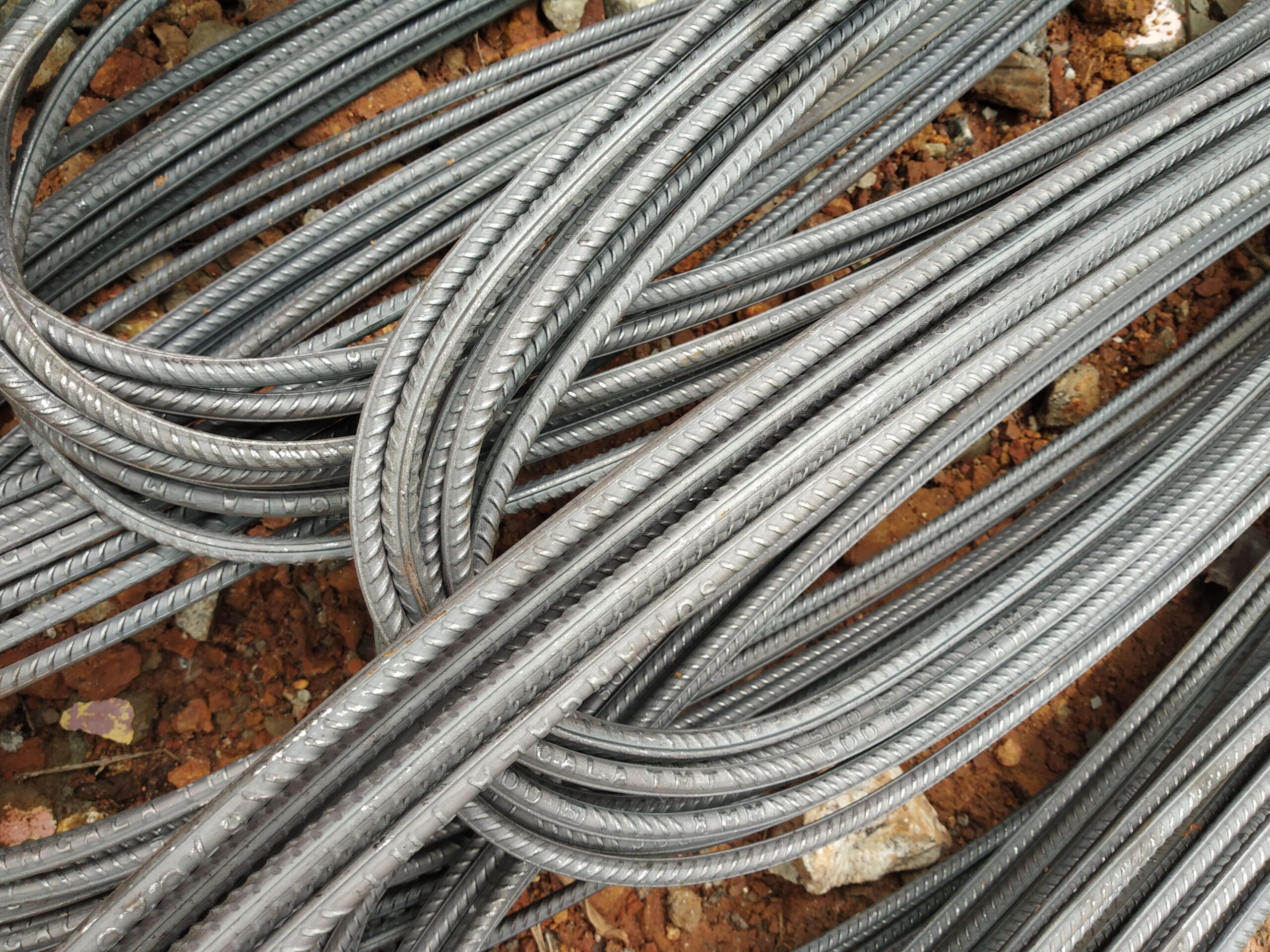
40 mm B500B Steel Rebar
40mm rebar is the largest standard hot-rolled diameter in DIN 488 / EN 10080 — delivering 1,256.6 mm² cross-section and 9.872 kg/m for the most demanding structural applications: mega-columns, large-diameter bored piles, bridge caissons and heavy transfer structures. Grade B500B with full export documentation and EN 10204 3.1 MTC.
Technical Specification: 40mm Rebar (B500B)
The 40 mm B500B rebar is the largest preferred diameter in both DIN 488 and EN 10080. With a nominal mass of 9.872 kg per metre and a cross-sectional area of 1,256.6 mm², it provides a characteristic tensile capacity of approximately 628 kN per bar — the highest available in standard hot-rolled reinforcing steel. One 40 mm bar is structurally equivalent to four 20 mm bars, enabling dramatic simplification of reinforcement cages in the most heavily loaded structural elements.
Grade B500B guarantees fyk ≥ 500 MPa, k ≥ 1.08, and Agt ≥ 5.0% (ductility class B). The ribbed surface profile meets DIN 488 bond requirements for use in reinforced concrete structures of all exposure classes under EN 1992-1-1 (Eurocode 2).
| Property | Value |
|---|---|
| Diameter (nominal) | 40 mm |
| Nominal mass | 9.872 kg/m |
| Cross-sectional area | 1,256.6 mm² |
| Bars per tonne (12 m) | ≈ 8 bars (≈ 101 m) |
| Grade | B500B (DIN 488, EN 10080) |
| Min. yield strength (fyk) | 500 MPa |
| Ductility class | B (k ≥ 1.08, Agt ≥ 5.0%) |
| Surface | Hot-rolled ribbed |
| Stock lengths | 6–18 m (typically 12 m) |
Where 40mm Rebar is Specified
Maximum-capacity applications that benefit from the largest standard diameter
Mega-Columns & Core Walls
Super-tall buildings and major civil structures use 40 mm bars as primary longitudinal reinforcement in mega-columns. Four 40 mm bars per column face deliver 5,026 mm² total area — equivalent to sixteen 20 mm bars, with a fraction of the tying complexity.
Large-Diameter Bored Piles
Piles of 1,500 mm diameter and above require large-bar longitudinal cages. 40 mm bars resist handling stresses during lowering, reduce total bar count, and minimise obstruction to tremie concrete placement.
Bridge Caissons & Piers
Major bridge substructures, sea caissons and offshore-adjacent civil elements frequently specify 40 mm bars. High ductility satisfies EN 1998-2 seismic bridge design requirements for DCH structures when paired with B500C longitudinal steel.
Weight Table: 40mm Rebar — Common Lengths
All masses calculated using the DIN 488 formula: d²(mm) × 0.00617 kg/m.
| Length | Mass per bar (kg) | Bars per tonne |
|---|---|---|
| 6 m | 59.23 kg | ≈ 17 |
| 9 m | 88.85 kg | ≈ 11 |
| 12 m | 118.46 kg | ≈ 8 |
| 18 m | 177.70 kg | ≈ 6 |
For a full cross-diameter reference from 6 mm to 40 mm, see our rebar weight chart. For grade-level comparisons including B500A and B500C, see the steel grades page.
Mechanical Splicing — Essential at 40mm
Lap splices for 40 mm B500B rebar require approximately 2,000–2,800 mm (50φ–70φ), adding up to 27.8 kg of additional steel per lap. In high-rise mega-column floors with many bars per cage, the cumulative steel saving from switching to parallel-thread mechanical couplers is substantial. 40 mm rebar couplers also eliminate the practical difficulties of overlapping very heavy bars in densely reinforced sections. See our rebar couplers page for details.
Export & Documentation for 40mm Rebar
Full DIN 488 / EN 10080 documentation package for every international shipment
EN 10204 3.1 MTC
Mill Test Certificate with heat number, full ladle chemistry, yield strength, tensile strength and elongation results.
Certificate of Origin
German or EU certificate of origin for preferential customs treatment in most destination countries.
Seaworthy Packaging
Steel-strapped bundles ≈ 2 t, individually labelled. FCL container or break-bulk to any port worldwide.
CE / DoP
Declaration of Performance for EN 10080 conformity. Additional traceability documentation on request.
Frequently Asked Questions — 40mm Rebar
What is the weight of 40mm rebar per metre?
What is the cross-sectional area and tensile capacity of 40mm rebar?
Is 40mm rebar the largest standard DIN 488 diameter?
What is the minimum bend diameter for 40mm B500B rebar?
What export markets receive 40mm B500B rebar from you?
Source German-standard 40mm rebar with full export documentation
Tell us your specification, quantity and destination port — we’ll respond with a detailed quotation including MTC and logistics options.
