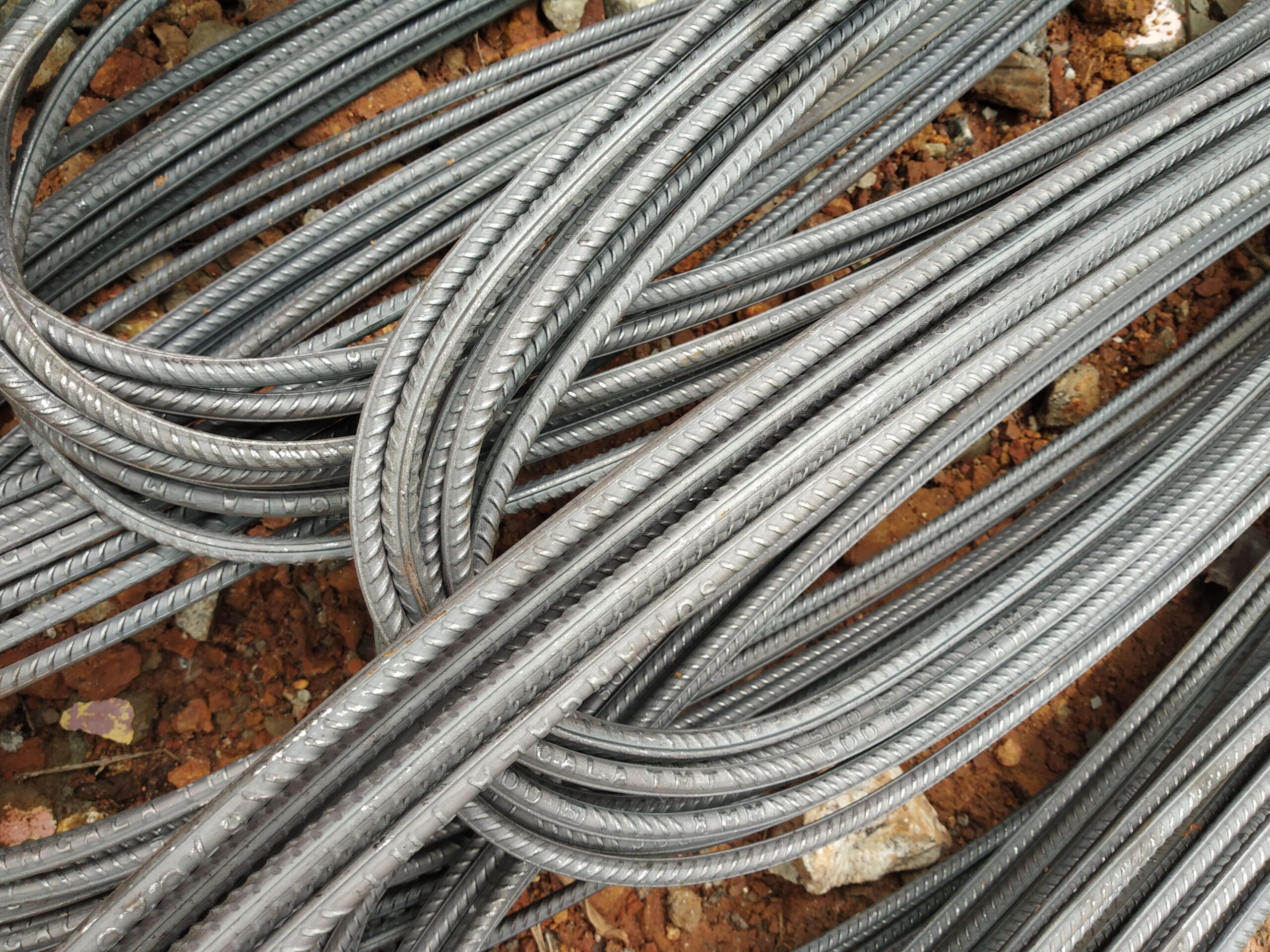
What Is B500B Rebar? Properties, Uses and Standards
B500B rebar is the high-ductility, 500 MPa hot-rolled reinforcing steel that forms the backbone of reinforced concrete construction. This guide explains its mechanical and chemical properties, the standards behind it, and where it is used.
B500B rebar is a weldable, ribbed reinforcing steel with a characteristic yield strength of 500 MPa and high ductility, defined under DIN 488 and EN 10080. The “B” prefix denotes a reinforcing steel (Betonstahl), “500” is the characteristic yield strength in megapascals, and the final “B” is the ductility class — high ductility. In short, B500B rebar is the everyday structural reinforcing bar: hot-rolled, deformed for bond with concrete, and specified for the great majority of beams, columns, slabs and foundations. This guide covers its properties, standards and applications.
B500B rebar: mechanical properties
The defining feature of B500B rebar is the combination of 500 MPa yield strength with high-ductility characteristics. The key mechanical values are summarised below.
| Property | Value |
|---|---|
| Characteristic yield strength (Re) | 500 MPa (minimum) |
| Ductility class | B — high ductility |
| k = Rm/Re | ≥ 1.08 |
| Agt (elongation at max force) | ≥ 5.0% |
| Form | Hot-rolled ribbed (deformed) bar |
| Diameters | 8–40 mm |
| Stock lengths | 6–18 m (commonly 12 m) |
The strain-hardening ratio k ≥ 1.08 and elongation Agt ≥ 5.0% give B500B enough reserve deformation capacity to redistribute load and warn before failure — the reason it is preferred over normal-ductility B500A for structural members. To see how it compares with the other grades, read B500A vs B500B vs B500C.
Chemical composition and weldability
B500B is a low-carbon, weldable reinforcing steel. Its chemistry is controlled to keep the carbon equivalent (CEV) within limits that ensure good weldability, with restricted levels of carbon, phosphorus, sulphur, nitrogen and copper. Because it is weldable, B500B can be joined by approved welding procedures to DIN EN ISO 17660, or spliced mechanically with couplers. The surface ribs (deformations) are rolled to a defined pattern so the bar develops strong bond with the surrounding concrete, which is essential for composite action.
Standards behind B500B
B500B is specified under the German standard DIN 488 within the European framework standard EN 10080, and it is designed for use under EN 1992-1-1 (Eurocode 2). The legacy German designation BSt 500 S corresponds broadly to modern high-ductility ribbed bar. For the relationship between the German and European standards, see DIN 488 vs EN 10080. Every batch we supply is documented with a Mill Test Certificate to EN 10204 3.1.
Where B500B rebar is used
B500B is the default structural reinforcement across construction:
- Foundations and piling — pile cages, pad and raft foundations.
- Columns and beams — main longitudinal reinforcement in framed structures.
- Slabs and walls — flexural and shear reinforcement.
- Infrastructure — bridges, retaining walls and civil works.
- Cut-and-bend assemblies — fabricated to BS 8666 / DIN 488 shape codes.
Explore the full product range and documentation on our B500B reinforcing steel pillar page, and use the rebar weight chart to convert your bar schedule into tonnes for a quotation.
Frequently asked questions
Common questions about B500B reinforcing steel.
What does B500B mean?
What is the yield strength of B500B rebar?
Is B500B rebar weldable?
What diameters does B500B come in?
Where is B500B rebar used?
Source German-standard rebar with full export documentation
Tell us your specification and destination port — we’ll respond with a detailed quotation.