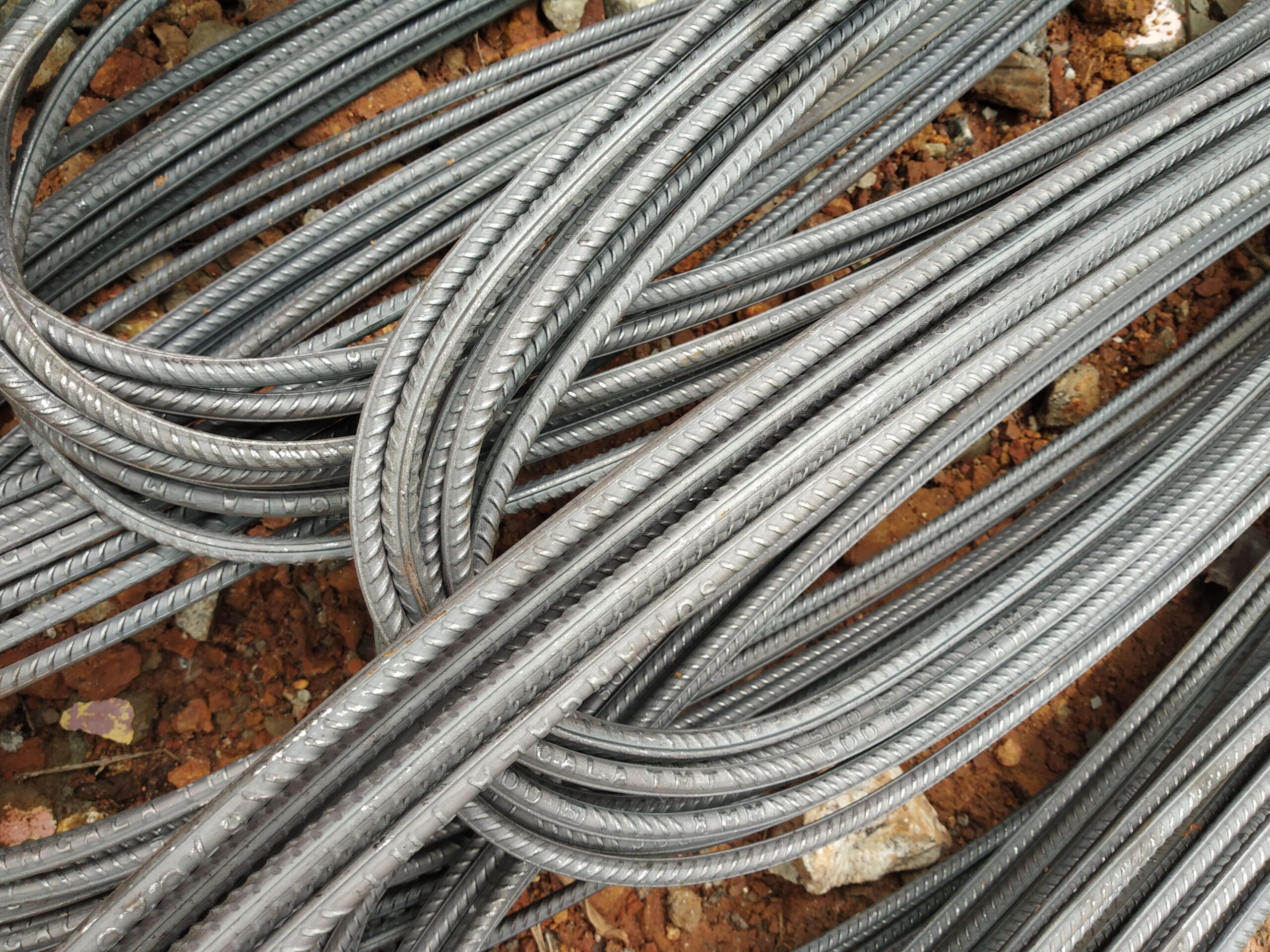
Rebar Procurement Checklist — Everything to Confirm Before Placing Your Order
A complete rebar procurement checklist protects you from specification mismatches, documentation gaps, and delivery surprises. This guide covers the 7 phases of a reinforcing steel purchase — from drawing review to on-site acceptance — with a structured checklist for each phase.
Why a Structured Rebar Procurement Checklist Matters
Reinforcing steel is a safety-critical structural material. A specification error — wrong grade, wrong standard, missing mill test certificate — discovered after concrete is poured can mean core samples, structural investigations, and potentially demolition. For international export orders, documentation errors at customs can hold entire shipments for weeks. A systematic rebar procurement checklist eliminates these risks by ensuring every critical item is confirmed before money changes hands and before the vessel sails.
The checklist below is structured around the seven natural phases of an export rebar purchase: specification, supplier qualification, quotation review, order placement, pre-shipment, shipping & customs, and on-site acceptance.
Phase-by-Phase Rebar Procurement Checklist
Tick every item before advancing to the next phase.
| Phase | Checklist Item | Notes |
|---|---|---|
| 1. Specification | Steel grade confirmed (B500B / B500C) | Match structural engineer’s spec |
| Standard confirmed (DIN 488 / EN 10080) | Or national equivalent if applicable | |
| Diameters and lengths listed | From bar bending schedule or QTO | |
| Ductility class confirmed | Class B or C per Eurocode 2 | |
| 2. Supplier Qualification | Mill / distributor registration verified | CE DoP reference available |
| EN 10204 3.1 capability confirmed | 3.2 if required by spec | |
| Export experience / references | Especially for your destination region | |
| 3. Quotation Review | Grade and standard stated on quote | Never assume — confirm in writing |
| Incoterms defined (FOB / CIF / CFR etc.) | Affects freight and insurance | |
| Document package listed (MTC, CoO, CE DoP) | See export-delivery page | |
| Lead time and loading port confirmed | Verify against project programme | |
| 4. Order Placement | Purchase order references PO number, grade, standard, Incoterms | Written PO required |
| Document requirements stated in PO | Type of cert, number of originals | |
| TPI requirement stated (if applicable) | See TPI guide | |
| Packing and marking requirements stated | Seaworthy bundles, bundle tags | |
| 5. Pre-Shipment | MTC received and reviewed before loading | Check Re, k, Agt, Ceq vs. limits |
| Heat numbers on MTC match bundle tags | Cross-check delivery note | |
| CE Declaration of Performance received | References EN 10080 | |
| TPI inspection report received (if required) | Filed with MTC in QA record | |
| 6. Shipping & Customs | Certificate of Origin obtained | Required for customs in most countries |
| Commercial invoice and packing list match MTC | Consistent heat numbers, weights | |
| Import duties / standards compliance checked | Destination country requirements | |
| 7. On-Site Acceptance | Bundle tags checked against MTC on arrival | Quarantine any unmatched bundles |
| Visual inspection — no cracking, injurious rust | Surface rust (no pitting) is acceptable | |
| All documents filed in project QA record | Retain for structure’s design life |
Common Rebar Procurement Mistakes and How to Avoid Them
The following issues come up repeatedly in international rebar procurement. Each can be prevented by disciplined use of the checklist above:
Wrong grade shipped
Ordering “B500” without specifying B500B or B500C leaves ambiguity — and some suppliers may ship B500A (lower ductility, often cold-rolled coil) if not explicitly told otherwise. Always specify the full grade designation in your purchase order.
MTC not reviewed before shipment
Many buyers receive the MTC with the delivery documents — by which time the material is on-site or at port. Requesting the MTC before loading gives you time to flag nonconformances without costly delays. See our detailed guide to reading a rebar mill certificate →.
Certificate of Origin missing
Several destination countries (particularly in the Middle East and Africa) require a legalised Certificate of Origin for import clearance. If the CoO is missing, the shipment can be held at port indefinitely. Confirm CoO requirements with your freight forwarder before the order is placed.
Incoterms misunderstood
FOB (Free on Board) transfers risk at the loading port — you arrange freight and insurance. CIF (Cost, Insurance, Freight) means the seller delivers to destination port. Get clarity on Incoterms in writing at quotation stage; mismatches are a common source of cost disputes.
Documents to Request for Every Rebar Export Order
- EN 10204 3.1 Inspection Certificate (or 3.2 if required) — one original minimum
- CE Declaration of Performance referencing EN 10080 and the applicable AVCP system
- Certificate of Origin — typically issued by the German Chamber of Commerce (IHK)
- Commercial invoice — matching PO number, grade, quantity, value
- Packing list — bundle count, weights, heat numbers per bundle
- Bill of Lading / CMR / AWB (depending on transport mode)
- TPI inspection report (if commissioned)
For a full breakdown of the delivery process for German rebar, see our export and delivery guide →.
Frequently Asked Questions — Rebar Procurement
What documents should I receive with every rebar export order?
What Incoterms are most common for international rebar shipments?
How do I verify a rebar supplier’s CE certification?
What is an acceptable level of surface rust on delivered rebar?
How should I handle a nonconformance discovered on delivery?
Source German-standard rebar with full export documentation
Tell us your specification and destination port — we’ll respond with a detailed quotation including EN 10204 3.1 MTCs, CE Declaration of Performance, and Certificate of Origin.