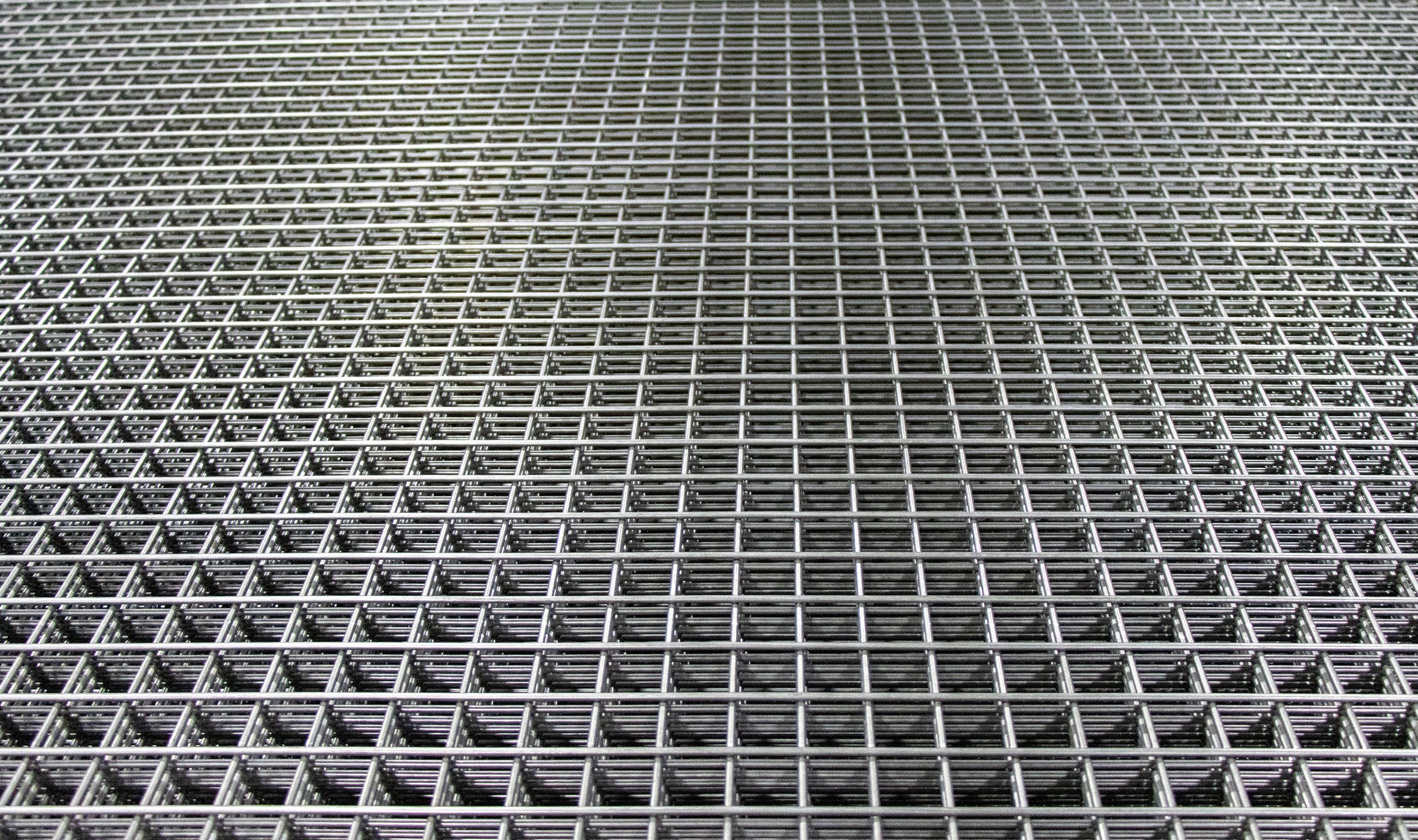
Reinforcing Mesh Sizes and Types: Welded Fabric Guide
Reinforcing mesh sizes are defined by mesh type, wire diameter, pitch and sheet dimensions. This welded fabric guide explains the standard Q and R mesh types, typical wire diameters and sheet sizes, and where each type is used.
Reinforcing mesh sizes describe welded steel fabric by four things: the mesh type, the wire diameter, the spacing (pitch) of the wires, and the overall sheet dimensions. Welded reinforcing mesh — also called fabric — is made by resistance-welding longitudinal and transverse wires into a grid, and it is produced from B500A or B500B reinforcing steel to DIN 488-4 within the EN 10080 framework. This guide explains the common mesh types, the typical wire diameters and sheet sizes, and how to choose the right fabric for a slab or wall.
Reinforcing mesh types: Q and R explained
Mesh is classified mainly by how the reinforcement is distributed between the two directions. The two principal families are square (Q) and rectangular/structural (R) mesh.
| Type | Wire arrangement | Typical use |
|---|---|---|
| Q (square) | Equal area both directions, square pitch (e.g. 100/100 or 150/150 mm) | Slabs, rafts, two-way spanning elements |
| R (rectangular / structural) | Heavier main wires one way, lighter cross wires (e.g. 100/200 mm pitch) | One-way slabs, walls, road bases |
| Bespoke | Custom wire diameter, pitch and sheet size to order | Project-specific reinforcement |
Mesh designations and exact wire diameters vary by national catalogue. The diameters and sizes below are typical examples — confirm the specific type and values on your drawings or with us before ordering.
Typical wire diameters and sheet sizes
Standard welded mesh is produced in rectangular sheets, with a common panel size around 6.0 × 2.3 m (other catalogue sizes are also available, and bespoke sheets can be made to order). Wire diameters typically range from about 5 to 12 mm depending on the mesh type, with wire spacings of 100, 150 or 200 mm. As an illustration:
- Light slab mesh — wire diameter around 6 mm at 150/150 mm pitch.
- General structural mesh — wire diameter around 8 mm at 100/100 or 150/150 mm pitch.
- Heavier structural mesh — wire diameter around 10–12 mm for higher reinforcement areas.
Mesh is usually made from B500A (cold-rolled) or B500B steel; for the grade distinction see B500A vs B500B vs B500C. The wire diameters follow the same unit-weight rule as bar — see the rebar weight chart to estimate the mass of a mesh sheet.
How mesh is specified and lapped
Welded fabric is specified by its type designation (e.g. a Q or R reference), the sheet size, and the quantity in sheets or tonnes. On site, adjacent sheets are overlapped so the reinforcement is continuous — the lap is usually expressed as a number of wire pitches or a minimum length, following the project’s design code (Eurocode 2). Mesh saves significant fixing time compared with loose bars because the grid is pre-welded, which is why it dominates slab and screed reinforcement.
Where welded mesh is used
Welded reinforcing mesh is the standard choice wherever a uniform grid of reinforcement is needed: ground-bearing and suspended slabs, rafts, screeds, walls, road and pavement bases, and precast elements. For heavily detailed or congested zones, loose bars or cut-and-bend assemblies are used instead. Explore the full fabric range, including bespoke panels, on our reinforcing steel mesh page, and read DIN 488 vs EN 10080 to understand the standards behind mesh (DIN 488-4).
Frequently asked questions
Common questions about reinforcing mesh sizes and types.
What are the standard reinforcing mesh types?
What is the standard size of a mesh sheet?
What wire diameters does reinforcing mesh use?
What grade of steel is welded mesh made from?
Is mesh better than loose bars?
Source German-standard rebar with full export documentation
Tell us your specification and destination port — we’ll respond with a detailed quotation.