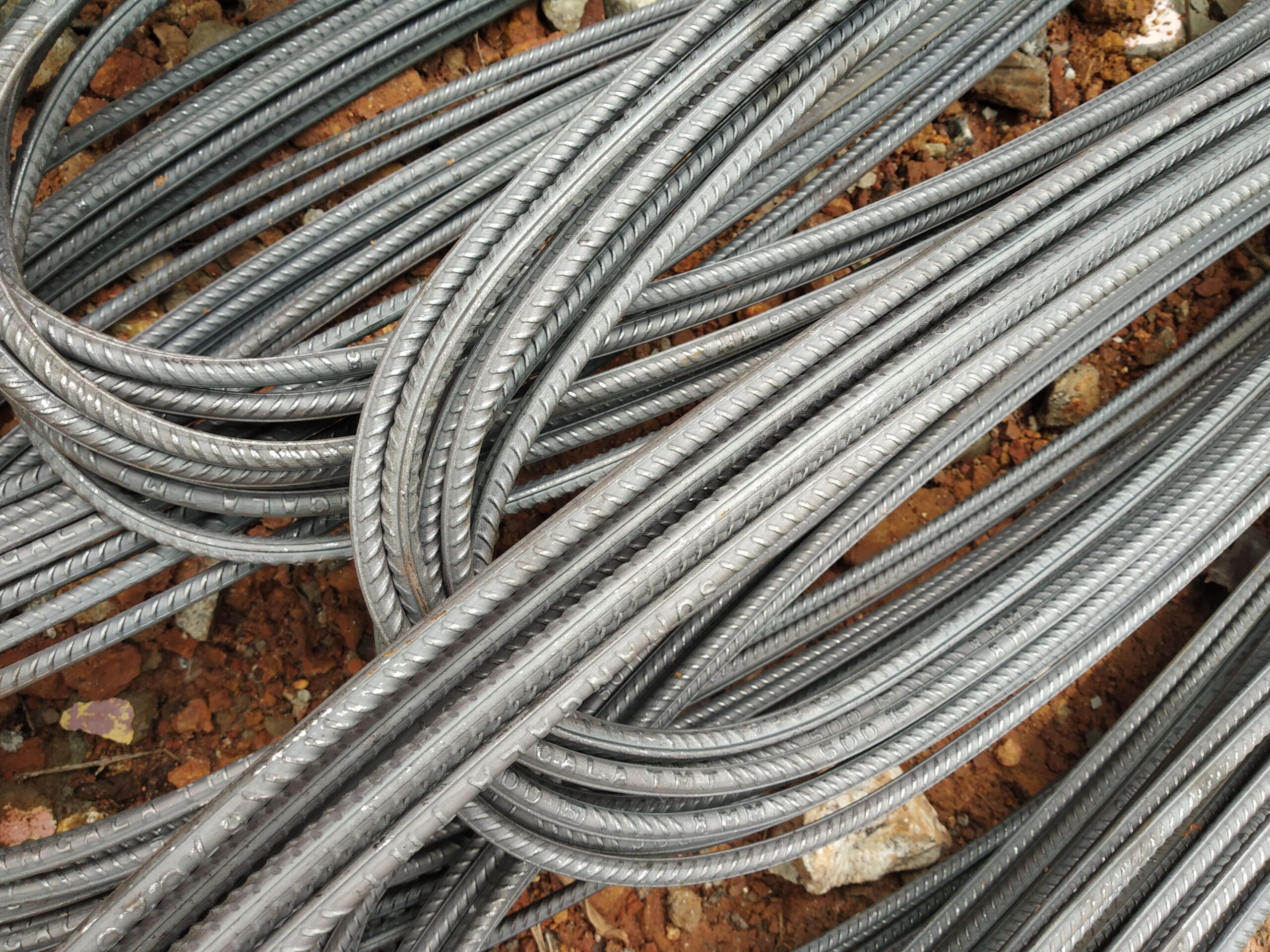
Steel Rebar Export to Netherlands
B500B reinforcing steel to EN 10080 — supplied from Germany with full Mill Test Certificate 3.1, Certificate of Origin, and seaworthy packaging for Rotterdam and Dutch construction projects.
Rebar Netherlands: The Dutch Market for Reinforcing Steel
The Netherlands is one of Europe’s most active construction markets, with ongoing investment in housing, infrastructure, and large-scale civil engineering projects. The Dutch construction sector operates under EU-harmonised standards, and reinforcing steel procured for concrete structures must comply with EN 10080 — the European standard for reinforcing steel for concrete. Our B500B rebar, produced and certified to EN 10080 in Germany, is technically comparable to the B500B grade used across the Dutch market.
It is important to note for transparency: while our B500B meets the EN 10080 standard technically, we do not hold a specific Dutch national mark or KOMO certification. Buyers should verify with their structural engineer or project specification whether an EN 10080-certified product without a local mark is accepted — in most cases it is, particularly for export projects, private contractors, and international-standard tenders. We supply on a comparability basis and provide all documentation to support your compliance review.
Product Range Available for Netherlands Export
We supply the full range of German-standard reinforcing steel for Dutch construction and import buyers:
- B500B deformed bars — 8–40 mm diameter, lengths 6–18 m (commonly 12 m), the primary structural rebar grade with minimum yield strength 500 MPa and high ductility (Agt ≥ 5.0%, k ≥ 1.08)
- B500A coils — 6–16 mm, for automated stirrup bending and mesh machines
- Reinforcing mesh panels — standard and bespoke, per DIN 488-4
- Cut-and-bend rebar — shape codes per DIN 488 / BS 8666
- Mechanical couplers — parallel-thread and taper-thread, 12–40 mm
- Lattice girders — for precast/filigree slab systems
Standard Rebar Weight & Section Reference
Use this table for quantity take-off and shipping weight calculations (formula: kg/m = d² × 0.00617).
| Diameter (mm) | Weight (kg/m) | Cross-section (mm²) |
|---|---|---|
| 8 | 0.395 | 50.3 |
| 10 | 0.617 | 78.5 |
| 12 | 0.888 | 113 |
| 14 | 1.21 | 154 |
| 16 | 1.58 | 201 |
| 20 | 2.47 | 314 |
| 25 | 3.85 | 491 |
| 32 | 6.31 | 804 |
| 40 | 9.86 | 1257 |
Shipping & Logistics to Rotterdam
Efficient transport from Germany to the Netherlands — Europe’s busiest port.
Container Shipment
20′ and 40′ containers loaded with rebar bundles (typically ~2 t per bundle) for smaller or mixed loads. Seaworthy banding and dunnage included. Rotterdam direct or via Antwerp.
Break-Bulk / Project Cargo
For large tonnage orders, break-bulk shipment via RORO or flat-rack to Rotterdam port is the most cost-effective option. We coordinate with freight forwarders on your behalf.
Road Transport (FTL/LTL)
For intra-European delivery, road freight from Germany to the Netherlands is the fastest option — typically 1–2 transit days. FTL and groupage loads available depending on quantity.
The Port of Rotterdam is the largest port in Europe and handles substantial volumes of steel and construction materials annually. For buyers based in Amsterdam, The Hague, Eindhoven, or anywhere in the Netherlands, road transport from Germany is a straightforward and cost-effective logistics option — no intermediate port handling required for inland delivery. HS code for rebar: typically 7214 20 (deformed bars) or 7217 (wire/coil).
Export Documentation We Provide
Every shipment to the Netherlands is supported by a complete export documentation package.
Mill Test Certificate 3.1
EN 10204 Type 3.1 MTC issued by the mill, confirming chemical composition and mechanical properties per EN 10080.
Certificate of Origin
EUR.1 or Chamber of Commerce Certificate of Origin confirming German manufacture, relevant for customs and procurement audit trails.
Packing List & Invoice
Detailed packing list with bundle weights, heat numbers, and diameter breakdown. Commercial invoice with Incoterms clearly stated.
CE Declaration of Performance
CE marking / Declaration of Performance (DoP) under the Construction Products Regulation where applicable, aligned with EN 10080.
EN 10080 Comparability: What Dutch Buyers Need to Know
The Netherlands, like all EU member states, has adopted EN 10080 as the harmonised standard for reinforcing steel. However, individual countries often maintain national certification marks — in the Netherlands, the relevant quality mark is managed under the CE framework. Our B500B is certified to EN 10080, which means the technical requirements (yield strength ≥ 500 MPa, k ≥ 1.08, Agt ≥ 5.0%, rib geometry) are identical.
For most international projects, export contracts, and private-sector construction, an EN 10080-certified B500B with a full 3.1 MTC is accepted without further local mark requirements. We recommend buyers confirm this with their structural engineer or project specification document before ordering. We can provide all supporting technical data sheets to facilitate that review.
Frequently Asked Questions — Rebar Export to Netherlands
Is German B500B rebar accepted on Dutch construction projects?
What is the typical transit time from Germany to the Netherlands?
What diameters and lengths do you supply?
What Incoterms do you offer for Netherlands deliveries?
Can you supply a Mill Test Certificate for every shipment?
Source German-standard rebar with full export documentation
Tell us your specification and destination port — we’ll respond with a detailed quotation for your Netherlands project.
