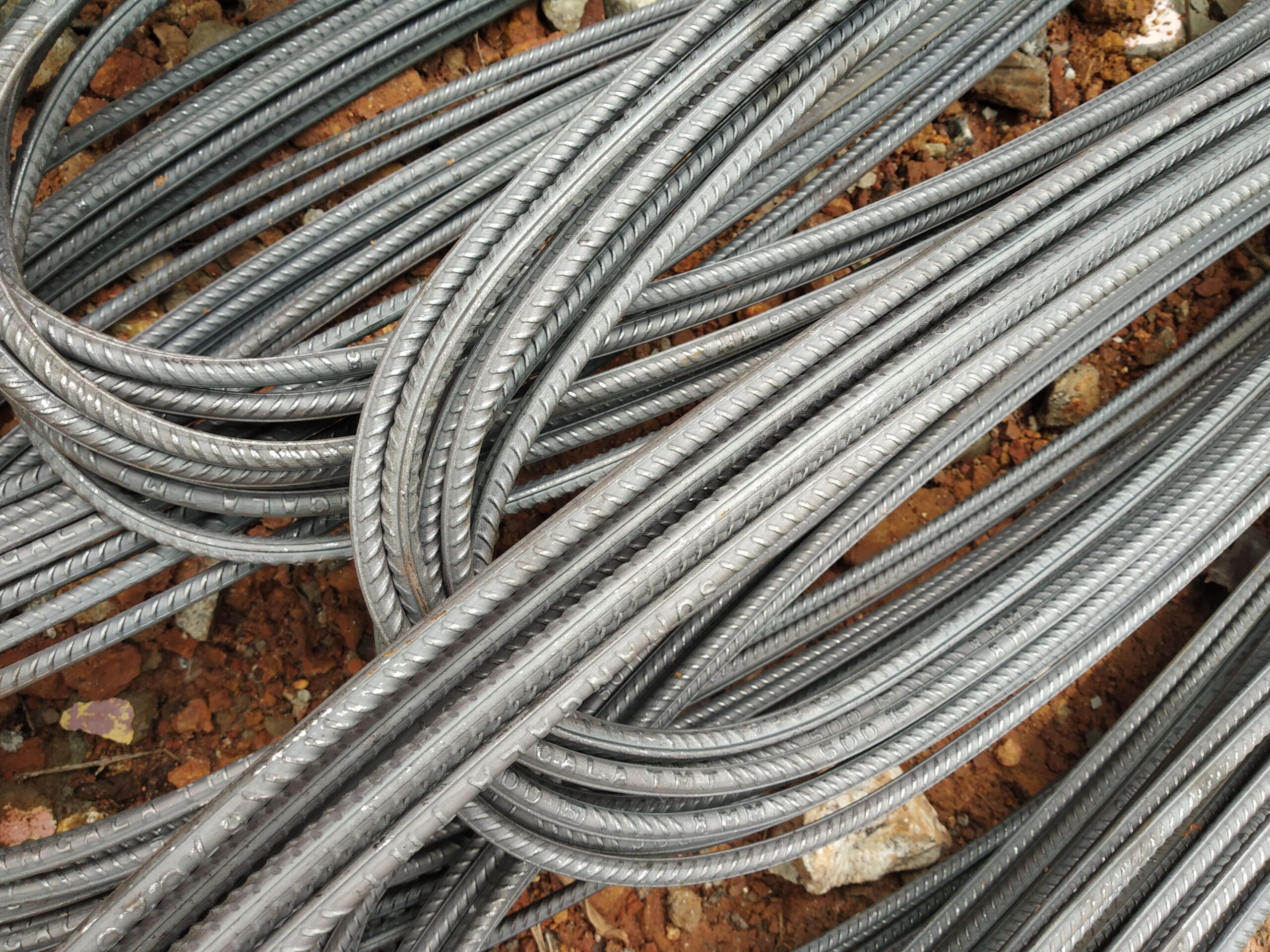
Steel Rebar Export to Switzerland
Supplying rebar Switzerland construction projects with EN 10080-compliant B500B reinforcing steel from Germany — technically comparable to SIA 262 / EN 10080 B500B, with full Mill Test Certificates, Certificate of Origin and export documentation for delivery via Rotterdam or Genoa.
Reinforcing Steel for Swiss Construction — Market Context
Switzerland is a landlocked, non-EU country with one of the most rigorous structural engineering traditions in Europe. Swiss structural design is governed by SIA 262 (Concrete Structures), published by the Swiss Society of Engineers and Architects (SIA). For reinforcing steel, SIA 262 references material requirements aligned with EN 10080, and the Swiss standard SN EN 10080 is the adopted national version of the European reinforcing steel standard.
The primary structural grade in Switzerland is B500B — 500 MPa minimum yield strength, ductility class B (k ≥ 1.08, Agt ≥ 5.0%) — identical to the parameters our German-produced B500B satisfies. Swiss engineers and project owners sourcing rebar internationally frequently specify EN 10080 B500B with an EN 10204 3.1 Mill Test Certificate as the qualification document, which is exactly what we supply as standard.
As a non-EU country, Switzerland requires full customs clearance on all imports, including rebar. Swiss customs duties on steel (HS 7214 99) should be confirmed with a Swiss customs broker, but Switzerland’s bilateral agreements with the EU and low general tariff rates typically make steel imports cost-effective.
Technical Comparability — SIA 262 / EN 10080 and Swiss Practice
Swiss practice under SIA 262 references the same B500B mechanical parameters as EN 10080: yield strength Re ≥ 500 MPa, tensile-to-yield ratio k ≥ 1.08, and total elongation at maximum force Agt ≥ 5.0%. Our German B500B is produced directly to EN 10080 and documented with EN 10204 3.1 Mill Test Certificates, making it directly comparable to Swiss B500B material.
Rib geometry, diameter tolerances and weight tolerances are governed by EN 10080 in both Germany and Switzerland. The Swiss designation B500B under SN EN 10080 is the same standard, meaning there is no material technical gap between our product and Swiss locally-sourced equivalent material.
B500B Specification Reference for Swiss Projects
| Diameter (mm) | Weight (kg/m) | Cross-section (mm²) | Typical Swiss application |
|---|---|---|---|
| 10 | 0.617 | 78.5 | Slabs, secondary reinforcement |
| 12 | 0.888 | 113 | Beams, residential slabs |
| 16 | 1.58 | 201 | Columns, retaining walls |
| 20 | 2.47 | 314 | Structural frames, tunnels |
| 25 | 3.85 | 491 | Foundation elements |
| 32 | 6.31 | 804 | Infrastructure, bridges, dam works |
Switzerland’s extensive tunnel and infrastructure programme (NEAT, road tunnels, alpine railways) makes larger-diameter B500B bars (20–32 mm) a significant procurement category. We supply the full range in standard 12 m lengths or cut-to-length.
Shipping to Switzerland — Landlocked Routing
Via Rotterdam (Rhine barge), Genoa (Mediterranean) or direct road freight from Germany.
Via Rotterdam & Rhine
For large-volume shipments, rebar is shipped to Rotterdam and onwards via Rhine barge to Basel (Switzerland’s inland port). This is a cost-efficient bulk route for western and central Switzerland. Basel Kleinhueningen and Basel Dreirosenbrücke are the key inland terminals.
Via Genoa (Adriatic/Med)
For southern Switzerland (Ticino, Valais) and Italian-speaking cantons, routing via Genoa can be efficient. Sea freight to Genoa followed by road northwards via the Gotthard or San Bernardino corridors serves southern project sites.
Direct Road from Germany
Direct road freight from Germany to Swiss project sites is frequently the most practical option for medium-sized orders. Transit from southern Germany to Zurich, Bern or Basel runs 1–2 days. Swiss customs clearance adds processing time — allow for this in project scheduling.
Export Documentation for Switzerland
Switzerland is outside the EU and requires full import documentation. Every shipment includes:
- EN 10204 Type 3.1 Mill Test Certificate — heat-traceable mechanical and chemical data, the primary qualification document for Swiss structural projects
- Certificate of Origin — German origin, required for Swiss customs
- EUR.1 Movement Certificate — where applicable under EU-Switzerland bilateral trade agreements, to qualify for preferential tariff treatment
- Commercial Invoice — with HS code 7214 99, customs value, total weight and product description
- Packing List — bundle detail with net and gross weights per bundle
- Bill of Lading or CMR — depending on whether shipment is sea or road
Swiss customs classification for ribbed reinforcing bars falls under HS 7214 99. Swiss VAT (MWST/TVA) applies on import — registered Swiss businesses can reclaim this. We recommend buyers engage a Swiss-licensed customs broker for smooth clearance.
For full documentation detail see Export & Delivery and Standards & Certification.
Frequently Asked Questions — Rebar Export to Switzerland
Is your B500B rebar compliant with SIA 262 for Swiss projects?
Does Switzerland charge customs duties on rebar from Germany?
What is the main entry point for rebar shipments into Switzerland?
Can you supply rebar for Swiss tunnel and infrastructure projects?
What is the typical lead time for rebar export to Switzerland?
Source German-standard rebar with full export documentation
Tell us your specification and destination port — we’ll respond with a detailed quotation.
