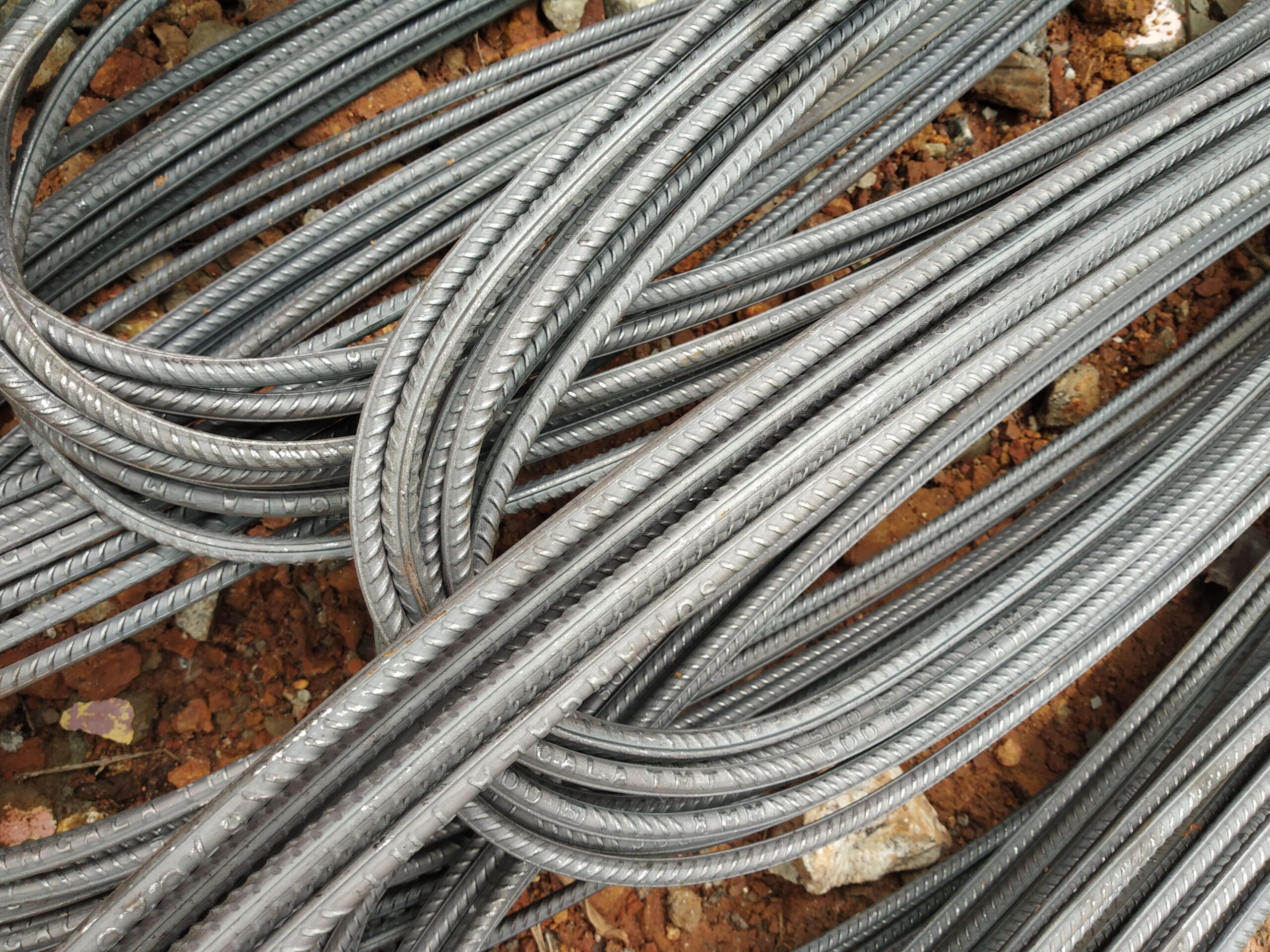
Steel Rebar Export to United States
German-standard B500B reinforcing steel — DIN 488 / EN 10080 compliant, technically comparable to ASTM A615 / A706 Gr60 — supplied with full Mill Test Certificate EN 10204 3.1 and export documentation for US port intake at Houston, Savannah, New York/NJ, and Los Angeles.
Rebar United States: Why Import German-Standard B500B?
The United States maintains significant domestic rebar production, yet specific project requirements consistently drive supplementary and specialty imports. High-specification structural projects — particularly those with international design consultants using Eurocode or hybrid specifications — increasingly call for EN 10080 / DIN 488 compliant reinforcing steel to match design assumptions for yield strength, ductility class, and traceability documentation.
German B500B reinforcing steel carries a minimum characteristic yield strength of 500 MPa (fyk), a strain hardening ratio k ≥ 1.08, and a minimum elongation at maximum force Agt ≥ 5.0%. These mechanical properties make it technically comparable to ASTM A615 Grade 60 (414 MPa) and ASTM A706 high-ductility bar — though the standards differ in test methodology and approval framework. This page describes technical comparability only; no formal US regulatory approval is claimed.
Typical US import scenarios include: large-diameter bars (28–40 mm) where domestic availability is constrained, project-specific traceability requirements demanding EN 10204 3.1 documentation, and mixed Eurocode/AISC projects in free-trade zones and US territories.
US Port Intake & Logistics Overview
Container and break-bulk shipments routed to major East Coast, Gulf Coast, and West Coast terminals.
Gulf Coast — Houston (Port of Houston)
Primary steel import gateway for the South and Midwest US. Handles both container and break-bulk heavy lifts. Excellent onward rail and truck distribution to Texas, Louisiana, and interior states.
East Coast — Savannah & New York/NJ
Port of Savannah handles growing volumes of industrial steel for Southeast construction markets. Port Newark / Port Elizabeth serves the dense Northeast corridor with direct warehouse and fab-shop connections.
West Coast — Los Angeles / Long Beach
Serves California and the Mountain West. Suitable for break-bulk bundles and container loads. Slightly longer transit from German Baltic or North Sea ports versus direct East Coast routing.
Shipments are packed in seaworthy bundles of approximately 2 tonnes, strapped and tagged, suitable for both 20 ft and 40 ft standard or high-cube containers. Break-bulk loading is available for larger project volumes. See our export & delivery page for full logistics detail.
B500B Mechanical Properties vs. ASTM A615 / A706 — Technical Comparability
The table below summarises key mechanical benchmarks side by side. Note that testing protocols differ between EN and ASTM standards; this comparison is for technical orientation only.
| Property | B500B (EN 10080 / DIN 488) | ASTM A615 Gr60 | ASTM A706 Gr60 |
|---|---|---|---|
| Min. yield strength | 500 MPa (72.5 ksi) | 420 MPa (60 ksi) | 420 MPa (60 ksi) |
| Strain hardening ratio k | ≥ 1.08 | — (ratio not specified) | ≥ 1.25 (fu/fy) |
| Min. elongation Agt | ≥ 5.0% | ≥ 9% (A5) | ≥ 14% (A5) |
| Ductility class | High (Class B) | Normal | High (seismic) |
| Weldability standard | DIN EN ISO 17660 | ASTM A706 only by default | ASTM A706 weldable |
| Mill certificate type | EN 10204 3.1 (third-party witness) | CMTR (Certified Mill Test Report) | CMTR |
For projects operating under AISC or ACI 318 specifications exclusively, the design engineer must confirm suitability. For international or mixed-specification projects accepting EN documentation, B500B is a natural fit.
Export Documentation for US Customs & Project Files
Every shipment is supported by a complete documentation package tailored to US import requirements.
Mill Test Certificate EN 10204 3.1
Third-party witnessed certificate stating chemical composition, mechanical test results, and heat/cast traceability. Accepted by most international project engineers alongside US CMTR requirements.
Certificate of Origin
Country-of-origin declaration for US Customs & Border Protection. German origin qualifies under relevant HS code classifications for reinforcing bars (HS 7214.20 / 7213.10).
Packing List & Commercial Invoice
Detailed packing list specifying bundle weights, bar diameters, lengths, and heat numbers — essential for port clearance and project QA records.
CE / Declaration of Performance
Where applicable, CE marking under EN 10080 / Construction Products Regulation is available, confirming conformity to the European harmonised standard.
Full documentation detail: Standards & Certification
Available Rebar Products for US Export
We supply the following product forms for export to US destinations. Specifications and available diameters are listed on their respective product pages:
- B500B Straight Bars — diameters 8–40 mm, lengths 6–18 m (12 m standard), hot-rolled, ribbed profile per DIN 488
- Rebar Coils B500A/B500B — 6–16 mm coil for automated stirrup and mesh fabrication
- Cut & Bent Rebar — fabricated to shape codes (DIN 488 / BS 8666 compatible) for direct placement
- Mechanical Rebar Couplers — parallel-thread and taper-thread splices, 12–40 mm
Contact us via the quote form with your diameter schedule, lengths, and destination port — we will respond with a detailed offer including freight indication.
Frequently Asked Questions — Rebar Export to the United States
Is German B500B rebar approved for use under ACI 318 or AISC specifications?
What US ports do you ship rebar to?
What is the HS code for German reinforcing bar exported to the US?
Can you supply large-diameter bars (28–40 mm) for US projects?
How long does transit take from Germany to US ports?
Source German-standard rebar with full export documentation
Tell us your specification and destination port — we’ll respond with a detailed quotation.
