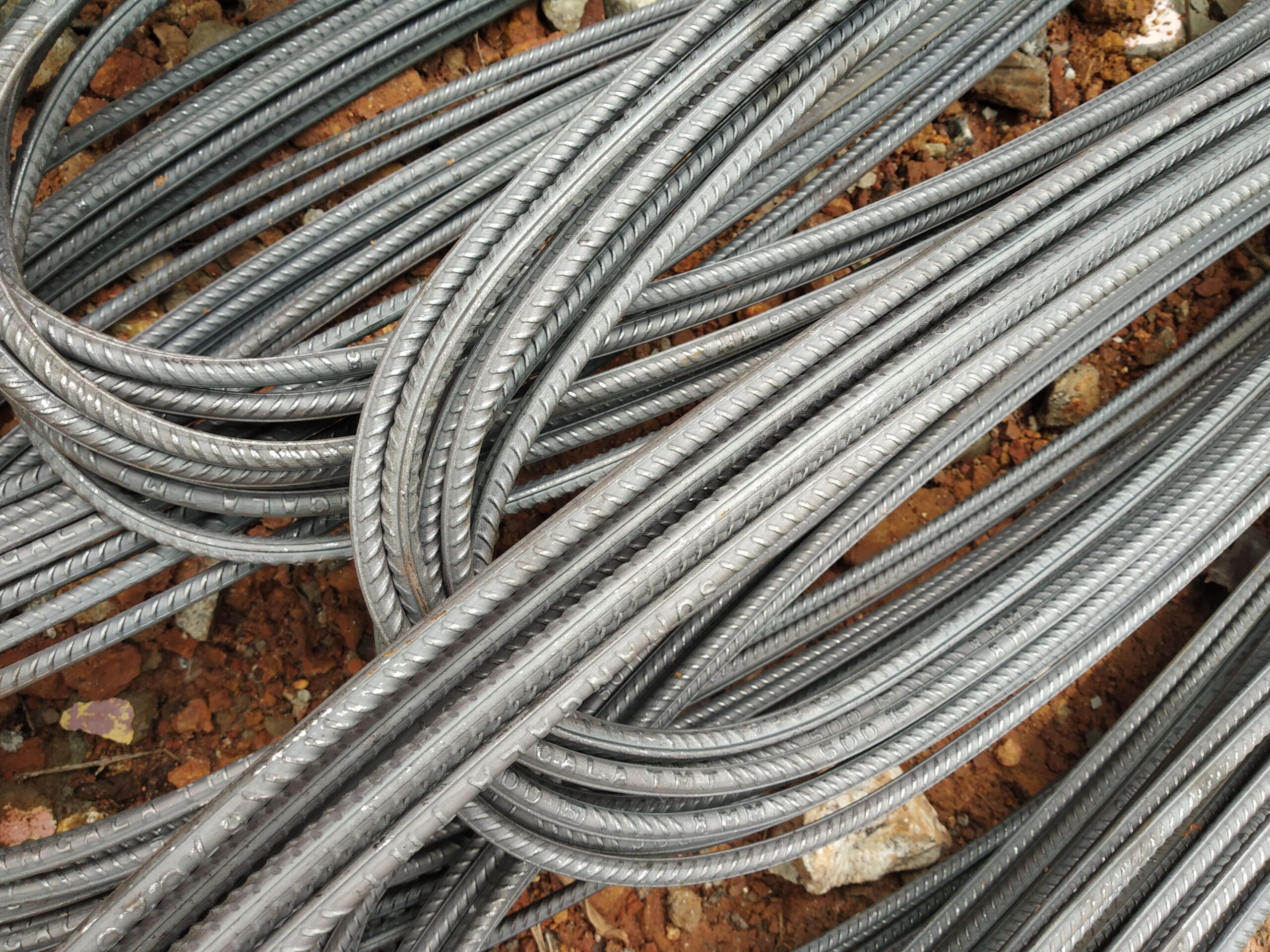
Steel Rebar Export to Australia
B500B reinforcing steel to EN 10080 — exported from Germany with full Mill Test Certificate 3.1, Certificate of Origin, and seaworthy packing for Australian construction, mining, and infrastructure projects. Technically comparable to AS/NZS 4671 Grade 500N/500E.
Rebar Australia: Construction, Mining and Infrastructure Demand
Australia is one of the Asia-Pacific region’s most significant construction and resources markets. Sustained demand for reinforcing steel comes from urban residential towers in Sydney, Melbourne, Brisbane, and Perth; civil infrastructure including road and rail corridors, tunnels, bridges, and port expansions; and the mining sector’s ongoing need for civil structures, plant foundations, and processing facilities across Western Australia, Queensland, and the Northern Territory.
Australian structural design follows AS 3600 (Concrete Structures Standard), with reinforcing steel specified to AS/NZS 4671 — the Australian and New Zealand standard for steel reinforcing materials. The primary grades are 500N (normal ductility, Class N, Agt ≥ 5.0%) and 500E (seismic ductility, Class E, Agt ≥ 10%), both at 500 MPa minimum yield. Our German B500B rebar to EN 10080 (min. yield 500 MPa, k ≥ 1.08, Agt ≥ 5.0%) is technically comparable to AS/NZS 4671 Grade 500N. This is a comparability statement — no AS/NZS certification or Standards Mark licence is claimed. Project engineers must confirm acceptability for their specific project and building consent authority.
For east-coast seismic applications where 500E is specified (particularly in Queensland and coastal NSW), our B500C grade (k ≥ 1.15, Agt ≥ 7.5%) is available on request — contact us to discuss your seismic ductility requirement.
Products for Australian Export
- B500B deformed bars — 8–40 mm diameter, standard lengths 6–18 m, ribbed surface per EN 10080. B500B product details →
- B500A/B500B coils — 6–16 mm for automated stirrup lines and prefab mesh. Rebar coils →
- Welded reinforcing mesh — standard Q/R panels and bespoke sizes. Mesh panels →
- Mechanical couplers — parallel-thread and taper-thread, 12–40 mm, for high-rise cores and bridge substructure. Couplers →
- Cut-and-bend rebar and stirrups — to project bending schedules, DIN 488 shape codes or equivalent. Cut & Bend →
Australian Entry Ports for Steel Rebar
Four major ports distribute steel rebar to different regions of Australia’s construction and mining markets.
Port Botany (Sydney)
NSW’s principal container port. Serves greater Sydney, Canberra, and inland NSW. Close to major construction project zones on the east coast. Strong container handling infrastructure.
Port of Melbourne
Australia’s largest container port by volume. Serves Victoria, South Australia, and southern NSW. Key logistics hub for intermodal distribution to inland construction sites.
Port of Fremantle
Western Australia’s primary gateway. Critical for mining sector supply chains — iron ore, gold, and lithium project civil works across the Pilbara, Goldfields, and South West.
Port of Brisbane
Queensland’s major container port. Serves south-east Queensland growth corridor and provides access to northern Queensland mining and infrastructure projects via road and rail.
AS/NZS 4671 Comparability: B500B and Grade 500N/500E
AS/NZS 4671 defines reinforcing steel grades by yield strength and ductility class. The relevant grades for comparison with our product range are:
| Grade | Min. Yield (MPa) | Ductility Class | Min. Agt (%) | k ratio (fsu/fsy) |
|---|---|---|---|---|
| 500N (AS/NZS 4671) | 500 | N (Normal) | ≥ 5.0 | ≥ 1.08 |
| 500E (AS/NZS 4671) | 500 | E (Seismic) | ≥ 10.0 | ≥ 1.15 |
| B500B (EN 10080 / our product) | 500 | Class B | ≥ 5.0 | ≥ 1.08 |
| B500C (EN 10080 / available) | 500 | Class C | ≥ 7.5 | ≥ 1.15 |
Frequently Asked Questions — Rebar Export to Australia
Is EN 10080 B500B rebar equivalent to AS/NZS 4671 Grade 500N?
Can you supply 500E seismic-grade rebar for Australian projects?
What is the typical sea transit time from Germany to Australian ports?
What documentation accompanies a rebar export shipment to Australia?
Can you supply rebar for mining project applications in Western Australia?
Source German-standard rebar with full export documentation
Tell us your specification and destination port — we’ll respond with a detailed quotation for your Australian project.
