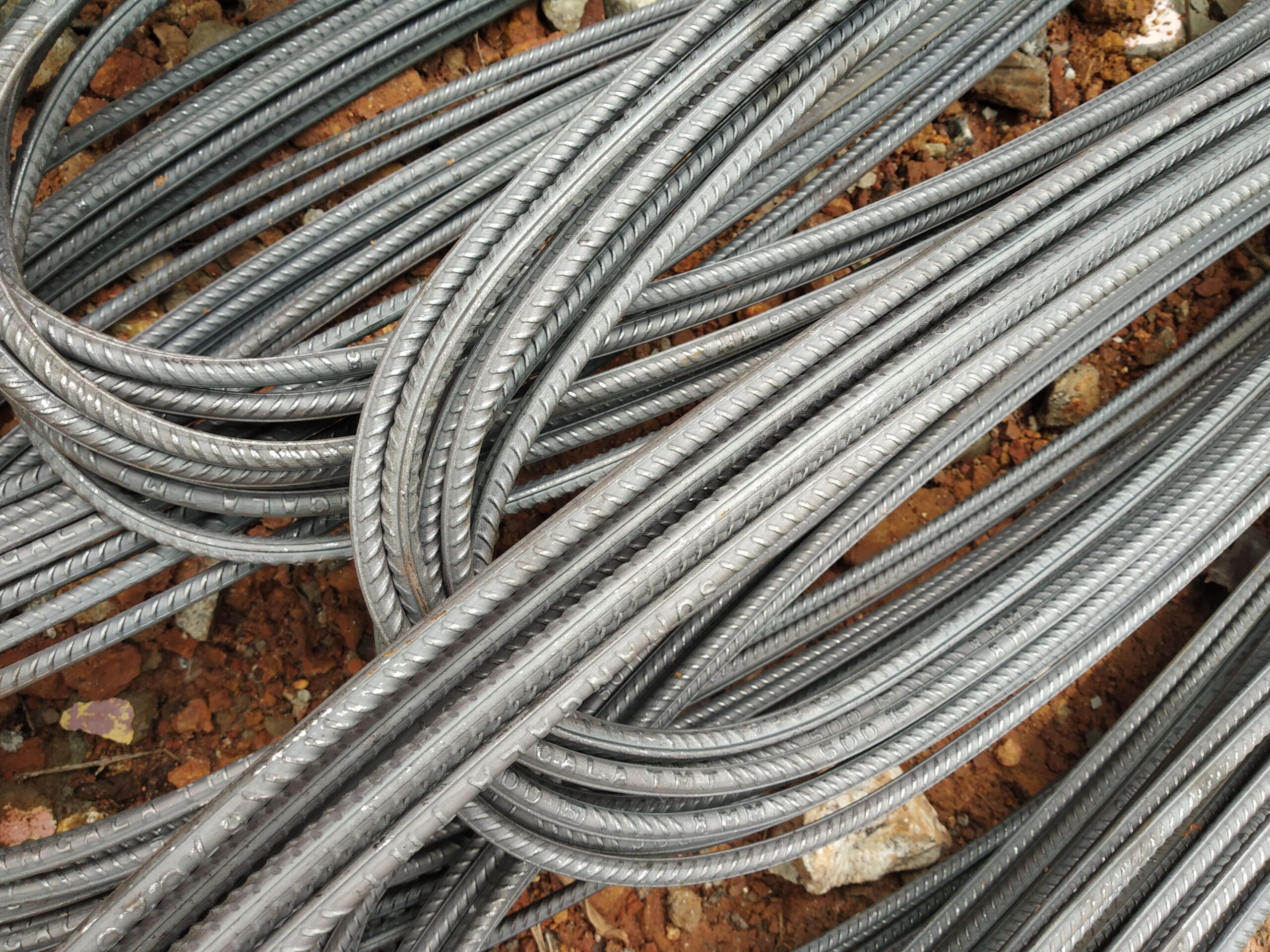
Steel Rebar Supply to Melbourne, Australia
German-standard B500B reinforcing steel — DIN 488 / EN 10080 compliant — exported directly to the Port of Melbourne with full EN 10204 3.1 Mill Test Certificates, Certificate of Origin, and seaworthy packing documentation.
Rebar Melbourne: Sourcing German-Quality Reinforcing Steel for Victoria’s Construction Sector
Melbourne is one of the Southern Hemisphere’s most dynamic construction markets. Victoria’s Big Build program — encompassing the Suburban Rail Loop, the Level Crossing Removal Project, and a continuing wave of high-density residential towers across the CBD and inner suburbs — has driven sustained demand for high-performance reinforcing steel. For project buyers, contractors, and importers seeking rebar Melbourne supply at German-certified quality, Steel Rebar Germany offers a direct export channel from EU-based mills to the Port of Melbourne.
We supply B500B reinforcing bar and complementary products — mesh, coils, couplers, and stirrups — manufactured to DIN 488 and EN 10080, the German and European standards for reinforcing steel. Every shipment is accompanied by a complete documentation package so procurement teams, structural engineers, and inspection authorities can verify material provenance and mechanical properties without ambiguity.
Melbourne’s Infrastructure Pipeline Drives Rebar Demand
Large-scale public and private construction programs create consistent requirements for certified reinforcing steel at scale.
Suburban Rail Loop & Metro Extensions
Underground bored tunnels and cut-and-cover stations require vast quantities of high-ductility B500B bar and mesh for primary lining, cross-passages, and station structures — all demanding full traceability documentation.
Level Crossing Removal Project
Grade separation works — road underpasses, rail viaducts, and new station platforms — generate demand for cut-and-bent rebar, coiled stirrups, and mechanical couplers where lap-splice access is constrained.
High-Rise Residential & Mixed-Use Towers
Melbourne’s Docklands, Southbank, and suburban growth corridors see continuous tower construction. Developers and concrete subcontractors sourcing reinforcing steel internationally require consistent quality, competitive lead times, and auditable supply chains.
Products Available for Export to Melbourne
Steel Rebar Germany can supply a full reinforcing steel package to Melbourne-based buyers, covering the primary product types used across civil, structural, and precast concrete applications:
B500B Reinforcing Bar — Straight Lengths
Hot-rolled, ribbed B500B bar in diameters 8–40 mm, typically supplied in 12 m stock lengths (6–18 m available). Minimum yield strength 500 MPa, characteristic strain at maximum force Agt ≥ 5.0%, and strain hardening ratio k ≥ 1.08 — meeting high-ductility requirements for seismic and moment-resisting frame design. See the B500B product page for full mechanical and geometrical specifications.
Cut-and-Bent Rebar
Bar processed to shape codes in accordance with DIN 488 or to BS 8666 equivalents, delivered as project-ready bundles. Suitable for foundations, pile caps, beams, and columns where on-site bending is impractical or quality-controlled bending is specified. Details at our cut-and-bend page.
Welded Reinforcing Mesh
Standard and bespoke mesh panels (B500A/B500B wire) per DIN 488-4, available in Q-type (square mesh) and R-type (rectangular) configurations. Standard panel dimensions 6.0 × 2.3 m; custom pitches and wire diameters to order. Learn more about mesh.
Rebar Coils
B500A and B500B in 6–16 mm diameter, hot- or cold-rolled, optimised for automated stirrup-bending and mesh-welding machines. Coil specifications here.
Mechanical Rebar Couplers
Parallel-thread and taper-thread couplers for dia 12–40 mm, providing a code-compliant alternative to lap splices in congested sections. Coupler range details.
B500B Bar — Diameter, Weight & Cross-Section Reference
Standard sizes available for export. Weight calculated per formula: kg/m = d²(mm) × 0.00617.
| Diameter (mm) | Weight (kg/m) | Cross-section (mm²) | Common application |
|---|---|---|---|
| 10 | 0.617 | 78.5 | Slabs, footpaths, mesh substitution |
| 12 | 0.888 | 113 | Suspended slabs, raft foundations |
| 16 | 1.58 | 201 | Beams, columns, pile caps |
| 20 | 2.47 | 314 | Primary structural members, transfer beams |
| 25 | 3.85 | 491 | Deep foundations, tunnel lining reinforcement |
| 32 | 6.31 | 804 | Heavy columns, bridge piers, retaining walls |
| 40 | 9.86 | 1257 | Heavily loaded transfer structures, piled foundations |
Export Routing: Germany to the Port of Melbourne
The Port of Melbourne is Australia’s largest container and general cargo port, handling over 3,000 vessel calls annually. It offers well-established break-bulk and container handling facilities suited to long-steel cargo, with direct hinterland connections to Melbourne’s construction precincts via road and rail.
Container vs. Break-Bulk
Rebar can be exported in either format depending on order volume and bar length. Standard 12 m bars exceed a 40-ft container’s internal length; export-cut lengths of 11.8 m can fit high-cube containers when bundled and shored correctly. For full-length bar or mixed-product orders, break-bulk vessel shipment in seaworthy bundles of approximately 2 tonnes is the conventional approach. Our team advises on the most practical mode for each order.
Typical Transit
Sea freight from German North Sea or Baltic ports to Port of Melbourne typically involves 25–35 days depending on routing via the Suez Canal or Cape of Good Hope and the service schedule. Transit times are confirmed at booking and included in shipping documentation provided to buyers.
Export Documentation Package
- EN 10204 3.1 Mill Test Certificate — third-party certified material traceability for every heat/cast
- Certificate of Origin — confirming German/EU manufacture for customs and contract compliance
- CE Declaration of Performance (DoP) — where applicable under EU Construction Products Regulation
- Commercial invoice, packing list, bill of lading — standard trade documentation
- Phytosanitary / fumigation certificate — required by Australian Biosecurity for timber packing materials
Full documentation is provided before departure; digital copies are available immediately on request, with originals couriered to the buyer or their customs agent as required. See our export and delivery page for a complete overview.
DIN 488 / EN 10080 B500B vs. Australian Standard AS/NZS 4671
Australian structural practice is governed by AS/NZS 4671 (Steel reinforcing materials) and AS 3600 (Concrete structures), which define grades 250N, 500N (normal ductility), and 500E (seismic/ductile). International buyers and engineers working on projects where a European supply chain is considered need to understand how German-standard material compares to the local specification.
Mechanical Property Comparison — B500B vs. 500N / 500E
| Property | B500B (EN 10080 / DIN 488) | 500N (AS/NZS 4671) | 500E (AS/NZS 4671) |
|---|---|---|---|
| Min. yield strength (Re) | 500 MPa | 500 MPa | 500 MPa |
| Max. yield strength (Re,max) | 650 MPa | 650 MPa | 650 MPa |
| Min. tensile / yield ratio (k = Rm/Re) | ≥ 1.08 | ≥ 1.08 | ≥ 1.15 |
| Min. total elongation at max force (Agt) | ≥ 5.0% | ≥ 5.0% | ≥ 10.0% |
| Ductility class | High (Class B) | N (Normal) | E (Earthquake) |
B500B mechanical properties broadly align with the Australian 500N grade in yield strength, maximum yield cap, and minimum ductility ratios. Projects requiring 500E (seismic) performance — with Agt ≥ 10% — would typically require B500C-grade material; buyers should specify the required ductility class explicitly when enquiring. Refer to our steel grades page and consult your project’s structural engineer regarding equivalence acceptance on a project-by-project basis.
Why Source Rebar from Germany for Melbourne Projects?
German and EU-standard reinforcing steel offers buyers a quality-assured, documented supply chain at international scale.
Full Traceability
Every coil, bundle, and mesh panel linked to an EN 10204 3.1 MTC with heat number, chemical composition, and certified mechanical test results.
Consistent EU Mill Production
German electric arc furnace mills produce to tight tolerances under continuous quality assurance regimes — reducing the variance risk inherent in spot-market procurement.
Seaworthy Export Packaging
Bundles strapped and protected for long-haul ocean freight; moisture barriers and timber bearers applied where required. Packaging detail documented on the packing list.
Complete Documentation
MTC, Certificate of Origin, DoP, invoice, packing list, and biosecurity certificates prepared and reviewed before vessel departure — no last-minute gaps.
Frequently Asked Questions — Rebar Supply to Melbourne
Can German B500B rebar be used on Melbourne construction projects?
What documentation is provided for import into Australia?
How long does shipping from Germany to the Port of Melbourne take?
What is the minimum order quantity for export to Melbourne?
Do you supply cut-and-bent rebar for Melbourne projects?
Related Pages
Steel Rebar Export to Australia
Country-level overview of our Australian export capability, documentation requirements, and market context.
Australia export page →Export & Delivery Overview
How we package, ship, and document reinforcing steel exports to international buyers worldwide.
Export & delivery →B500B Reinforcing Bar
Full technical specification for our primary product — B500B hot-rolled bar per DIN 488 / EN 10080.
B500B product page →Source German-standard rebar with full export documentation
Tell us your Melbourne project specification and required delivery window — we’ll respond with a detailed quotation including product, logistics, and documentation scope.
