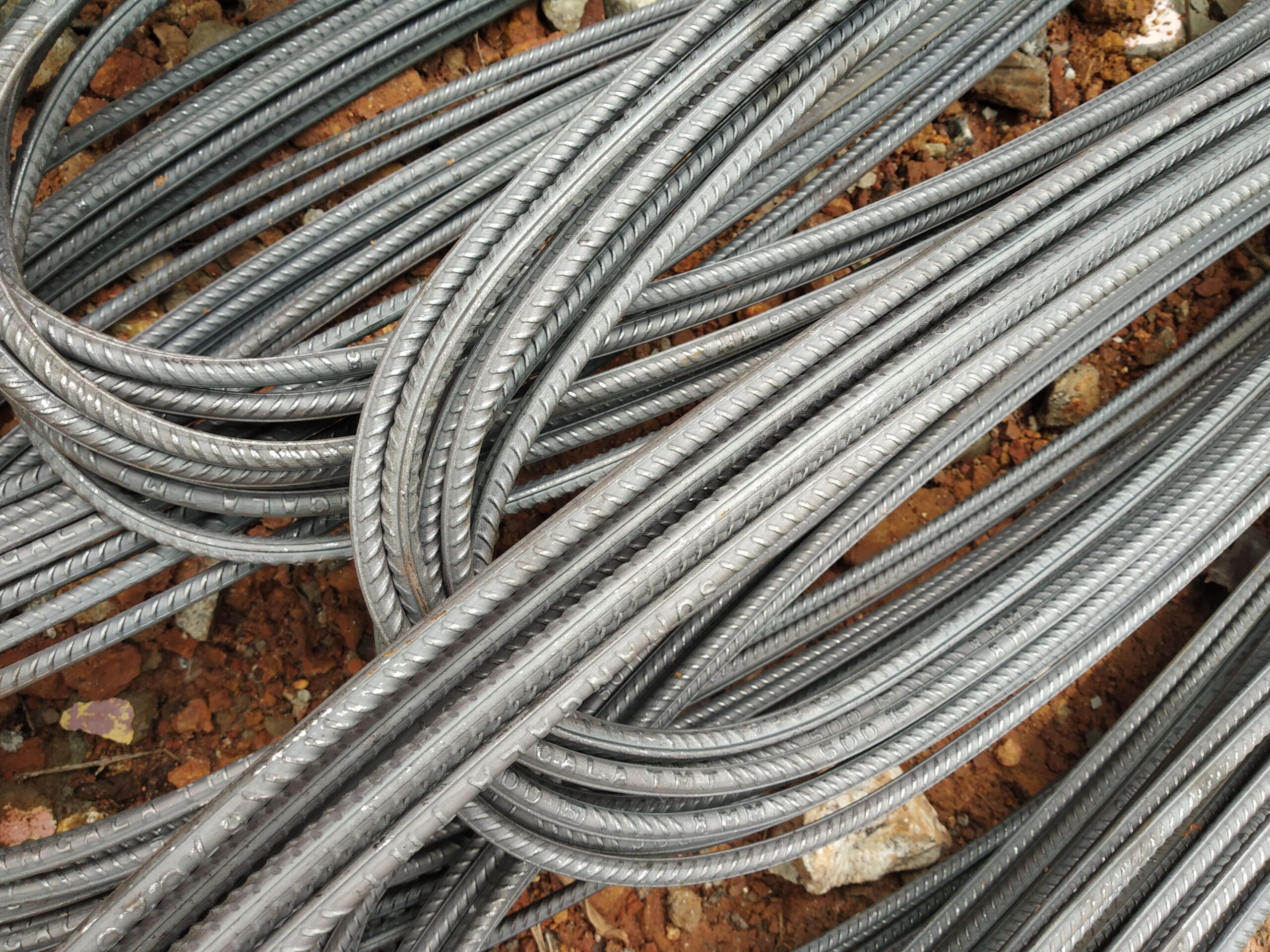
12 mm B500B Steel Rebar
12mm rebar is a true structural workhorse — the most widely used diameter in slabs, walls, beams and footings across European and international construction. At 0.888 kg/m with full B500B ductility compliance, it offers the ideal balance of structural capacity and handling economy.
12mm Rebar: Technical Specification (B500B, DIN 488)
The 12 mm diameter B500B reinforcing bar is a primary structural diameter in European reinforced concrete design. It meets the full requirements of DIN 488 and EN 10080 for high-ductility class B: minimum yield strength 500 MPa, k ≥ 1.08 (Rm/ReH ratio), and Agt ≥ 5.0% (uniform elongation at maximum force). Its nominal mass of 0.888 kg/m places it in a practical zone where a single tonne represents approximately 94 bars of 12-metre length — efficient for both transport and site handling.
| Property | Value |
|---|---|
| Nominal diameter | 12 mm |
| Nominal mass (weight per metre) | 0.888 kg/m |
| Nominal cross-section area | 113.1 mm² |
| Minimum yield strength (ReH) | 500 MPa |
| Strain-hardening ratio k (Rm/ReH) | ≥ 1.08 |
| Uniform elongation Agt | ≥ 5.0 % |
| Standard | DIN 488 / EN 10080 |
| Bars per tonne (12 m bars) | ≈ 94 bars (≈ 1 126 m total) |
| Available form | Straight bars (6–12 m) · Coil (where applicable) |
Formula: kg/m = 12² × 0.00617 = 144 × 0.00617 = 0.888 kg/m. Cross-section A = π/4 × 12² = 113.1 mm². Bars per tonne (12 m): 1 000 ÷ (0.888 × 12) = 1 000 ÷ 10.656 ≈ 94 bars.
Structural Applications for 12 mm Rebar
From floor slabs to foundations, 12mm B500B is the default structural reinforcing diameter across many design standards.
Floor Slabs
12mm at 150 or 200 mm centres is the most common slab specification in European residential and commercial construction, providing effective areas of 754 or 566 mm²/m respectively.
Walls & Cores
Structural concrete walls, lift cores and shear walls typically specify T12 vertical and horizontal bars as the minimum structural reinforcement diameter.
Beams
12mm bars are used as secondary beam reinforcement and as the primary bar in smaller beams, often alongside 16mm or 20mm main tension bars.
Footings & Foundations
Pad footings, strip foundations and raft slabs routinely use 12mm as the main reinforcing diameter. See foundations & piling →
Mechanical Couplers
12mm is the smallest diameter for which parallel-thread mechanical couplers (to replace lap splices) are commonly specified. Rebar couplers →
Infrastructure
Bridge decks, culverts and highway structures widely use 12mm transverse and distribution steel. Infrastructure & bridges →
Weight Reference Table for 12mm Rebar
Use these values for take-off calculations, container-load planning and export quotations. Based on nominal mass 0.888 kg/m:
| Bar length | Weight per bar | Bars per tonne | Total length per tonne |
|---|---|---|---|
| 6 m | 5.33 kg | ≈ 188 bars | ≈ 1 126 m |
| 12 m | 10.66 kg | ≈ 94 bars | ≈ 1 126 m |
| 18 m | 15.98 kg | ≈ 63 bars | ≈ 1 125 m |
For a full range of diameters see our rebar weight chart. Compare with nearby diameters — 10mm and 14mm — on their respective product pages. Grade properties are detailed on the steel grades page.
Frequently Asked Questions — 12mm Rebar
What is the weight of 12mm rebar per metre?
How many 12mm rebar bars are in a tonne?
What cross-section area does a 12mm bar provide?
Is 12mm rebar weldable?
What export documentation is provided with 12mm rebar?
Source German-standard 12mm rebar with full export documentation
Tell us your specification, quantity and destination port — we’ll respond with a detailed quotation for B500B 12mm rebar to DIN 488 / EN 10080.
