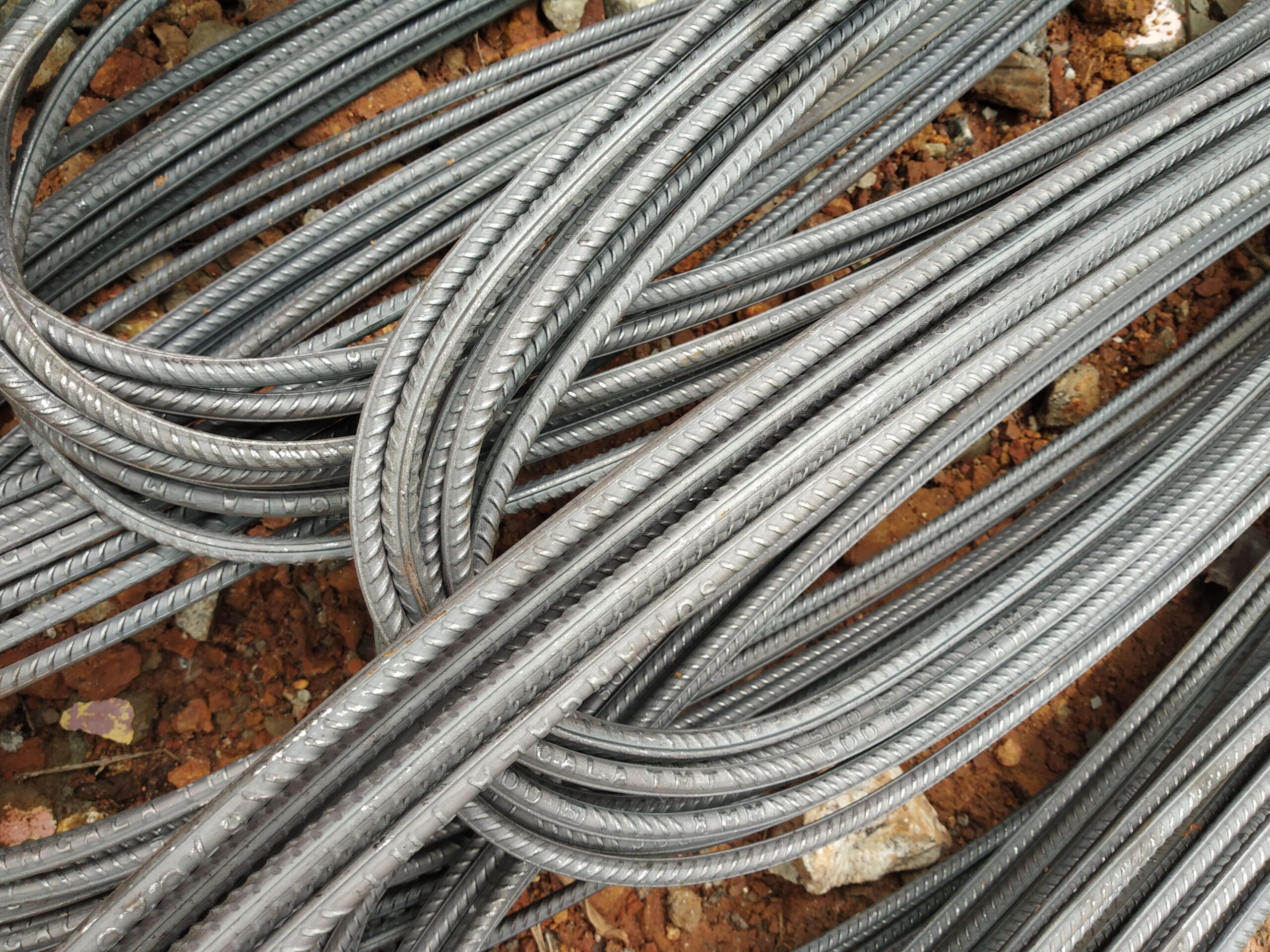
16 mm B500B Steel Rebar
16mm rebar is the primary structural diameter for heavily loaded slabs, beams, walls and footings — weighing 1.58 kg/m with a cross-section of 201.1 mm² and full B500B high-ductility compliance. The most specified medium-heavy rebar diameter in European reinforced-concrete construction.
16mm Rebar: Technical Specification (B500B, DIN 488)
The 16 mm B500B reinforcing bar is one of the most widely ordered diameters for structural concrete work in Europe and internationally. Compliant with DIN 488 and EN 10080, it achieves the full high-ductility class B requirements: minimum yield strength 500 MPa, strain-hardening ratio k ≥ 1.08 (Rm/ReH), and uniform elongation at maximum force Agt ≥ 5.0%. At 1.58 kg/m it is heavy enough for primary structural bars in most beams and slabs, yet manageable enough for efficient site fixing without mechanical assistance.
| Property | Value |
|---|---|
| Nominal diameter | 16 mm |
| Nominal mass (weight per metre) | 1.58 kg/m |
| Nominal cross-section area | 201.1 mm² |
| Minimum yield strength (ReH) | 500 MPa |
| Strain-hardening ratio k (Rm/ReH) | ≥ 1.08 |
| Uniform elongation Agt | ≥ 5.0 % |
| Standard | DIN 488 / EN 10080 |
| Bars per tonne (12 m bars) | ≈ 53 bars (≈ 633 m total) |
| Available form | Straight bars (6–12 m) · Cut & bent to shape codes |
Formula: 16² × 0.00617 = 256 × 0.00617 = 1.579 kg/m (tabulated as 1.58 kg/m). Cross-section A = π/4 × 16² = 201.1 mm². Bars per tonne (12 m): 1 000 ÷ (1.58 × 12) = 1 000 ÷ 18.96 ≈ 53 bars.
Primary Structural Applications for 16 mm Rebar
Where 12mm is the default and 20mm steps up for heavy spans — T16 is the preferred structural bar across the broadest range of applications.
Primary Slab Reinforcement
16mm at 150 mm centres provides 1 340 mm²/m, making it the standard choice for medium-to-heavy span slabs in commercial and residential construction.
Beam Main Bars
T16 is the most common primary tension bar in standard reinforced-concrete beams up to approximately 6–8 m span, used with stirrups of 8–10mm diameter.
Columns & Cores
16mm longitudinal bars form the main cage reinforcement in columns and lift cores of low-to-medium rise buildings, often at 4–6 bars per face.
Deep Foundations & Pile Caps
Pile caps, deep pad footings and transfer slabs routinely use T16 as primary flexural reinforcement. See foundations & piling →
Mechanical Couplers at 16mm
Parallel-thread couplers at 16mm are widely available and specified wherever continuous reinforcement through construction joints is required without extended lap lengths. Rebar couplers →
Bridges & Civil Structures
Bridge abutments, retaining walls and highway culverts frequently specify T16 longitudinal and transverse bars as the primary structural diameter. Infrastructure & bridges →
Weight & Quantity Reference for 16mm Rebar Orders
Accurate tonnage data is essential for procurement, container loading and export quotations. Based on nominal mass 1.58 kg/m:
| Bar length | Weight per bar | Bars per tonne | Total length per tonne |
|---|---|---|---|
| 6 m | 9.48 kg | ≈ 106 bars | ≈ 633 m |
| 12 m | 18.96 kg | ≈ 53 bars | ≈ 633 m |
| 18 m | 28.44 kg | ≈ 35 bars | ≈ 630 m |
Compare with 14mm (1.209 kg/m) below and the full B500B range for 20mm, 25mm and 32mm options. Full weight reference at rebar weight chart. Grade properties at steel grades.
Frequently Asked Questions — 16mm Rebar
What is the weight of 16mm rebar per metre?
How many 16mm bars are in a tonne?
What cross-section area does a 16mm bar provide?
What standards apply to 16mm B500B rebar?
Can 16mm B500B rebar be exported worldwide?
Source German-standard 16mm rebar with full export documentation
Tell us your specification, quantity and destination port — we’ll respond with a detailed quotation for B500B 16mm rebar to DIN 488 / EN 10080.
