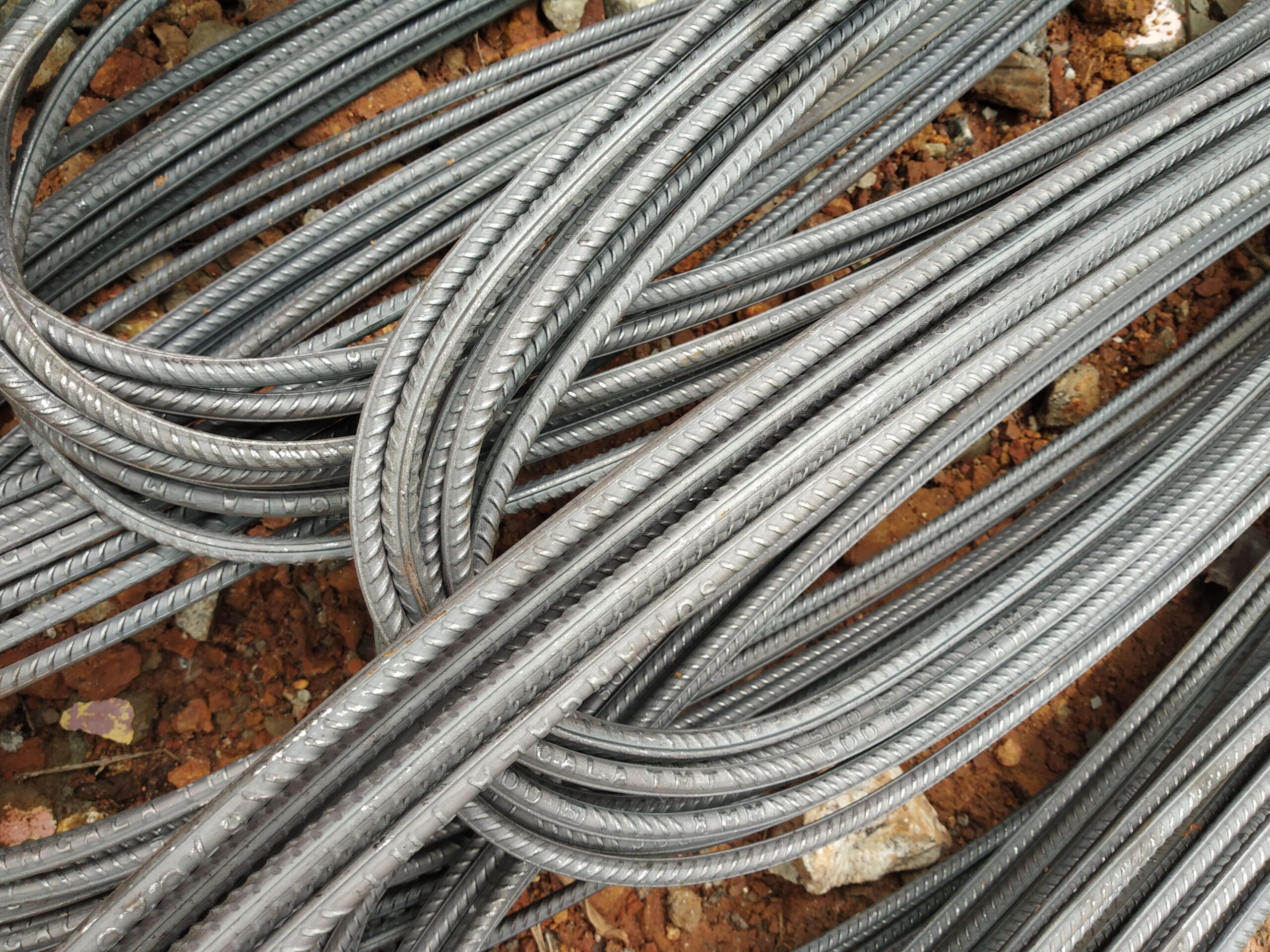
Steel Rebar Supply to Abidjan, Ivory Coast
German-standard B500B reinforcing steel — DIN 488 / EN 10080 compliant — shipped to Abidjan Port with EN 10204 3.1 Mill Test Certificate, Certificate of Origin, and full packing documentation.
Rebar Abidjan: Supplying German-Standard Steel to West Africa’s Economic Hub
Abidjan is the commercial capital of Côte d’Ivoire and the most active port gateway in francophone West Africa. The city is at the centre of a major construction cycle driven by bridge projects, urban metro infrastructure, and expansion of the port complex itself. These are large-scale public infrastructure works that demand verifiable, high-quality reinforcing steel with traceable mill documentation — requirements that German and EU-standard production is specifically designed to meet.
Steel Rebar Germany supplies B500B hot-rolled deformed bars manufactured to DIN 488 and EN 10080. B500B is the high-ductility rebar grade with minimum yield strength 500 MPa, k ≥ 1.08, and Agt ≥ 5.0% — properties that make it appropriate for bridge decks, metro viaducts, and port infrastructure where ductile behaviour under load is a structural requirement. The grade is widely specified on internationally financed infrastructure projects across West Africa that follow European or international design codes.
Ivory Coast’s construction sector operates with a mix of French NF standards and international practice. B500B’s technical parameters are broadly comparable to NF A 35-080 grade FE 500 in yield strength terms, though they are separate standards. Structural engineers on internationally procured projects typically accept B500B on the basis of the EN 10204 3.1 Mill Test Certificate, which provides the complete mechanical and chemical data required for verification. We provide this documentation as a standard part of every export shipment — together with a Certificate of Origin confirming EU/German provenance.
Routing to Abidjan Port: Logistics and Shipping Options
Abidjan’s port (Port Autonome d’Abidjan) is one of the deepest natural harbours in West Africa and handles significant project cargo volumes. Both containerised and break-bulk shipment are available for rebar exports from Germany.
- Containerised (flat-rack / open-top): Bars in 6 m or 12 m stock lengths are bundled into seaworthy packs of approximately 2 tonnes and loaded onto flat-rack or open-top containers. This mode is well-suited to phased deliveries on multi-phase infrastructure projects, giving procurement teams flexibility to align deliveries with construction programme.
- Break-bulk / project cargo: For high-volume bridge or port works, break-bulk shipment through Abidjan’s bulk terminal offers lower per-tonne freight cost for large lots. Unitised bundles are crane-handled from vessel to quayside and can be trucked directly to site or to a nearby laydown area.
European origin ports with regular West Africa services include Hamburg, Rotterdam, and Le Havre. Transit times from Hamburg or Rotterdam to Abidjan typically range from 14 to 22 days depending on vessel rotation. We coordinate with experienced project cargo freight forwarders to ensure documents — bill of lading, MTC, CoO, packing list — arrive with the importer’s clearing agent ahead of vessel arrival, minimising port demurrage risk.
Key Product Range for Abidjan Projects
Our export scope for Ivory Coast covers the full range of reinforcement products needed from foundation stage through superstructure:
- B500B straight bars: 8–40 mm diameter, 6–18 m stock lengths (12 m standard), ribbed DIN 488 profile, bundled in 2 t seaworthy packs.
- Rebar coils (B500A/B500B): 6–16 mm for CNC stirrup bending machines used on large bridge and viaduct projects.
- Welded mesh panels: Standard Q/R-type and bespoke panels to DIN 488-4; suitable for metro station slabs, retaining walls, and industrial flooring.
- Mechanical rebar couplers: Parallel-thread or taper-thread, 12–40 mm diameter — eliminate lap-splice congestion in bridge columns and metro structure walls.
- Cut and bend: Pre-processed to DIN 488 shape codes per project BBS, bundled by element for efficient site placement.
Bar Sizes & Specifications — DIN 488 / EN 10080
Standard diameter range available for export to Abidjan and across Ivory Coast.
| Diameter (mm) | Weight (kg/m) | Cross-section (mm²) |
|---|---|---|
| 8 | 0.395 | 50.3 |
| 10 | 0.617 | 78.5 |
| 12 | 0.888 | 113 |
| 16 | 1.58 | 201 |
| 20 | 2.47 | 314 |
| 25 | 3.85 | 491 |
| 32 | 6.31 | 804 |
| 40 | 9.86 | 1257 |
Frequently Asked Questions — Rebar Export to Abidjan
Is B500B accepted on French-funded or EU-funded infrastructure projects in Ivory Coast?
What documentation is included with every export shipment to Abidjan?
Can you supply rebar for bridge and viaduct projects specifically?
How is the steel packaged for sea transit to Abidjan?
What are typical transit times from Germany to Abidjan?
Source German-standard rebar with full export documentation
Tell us your specification and destination port — we’ll respond with a detailed quotation.
