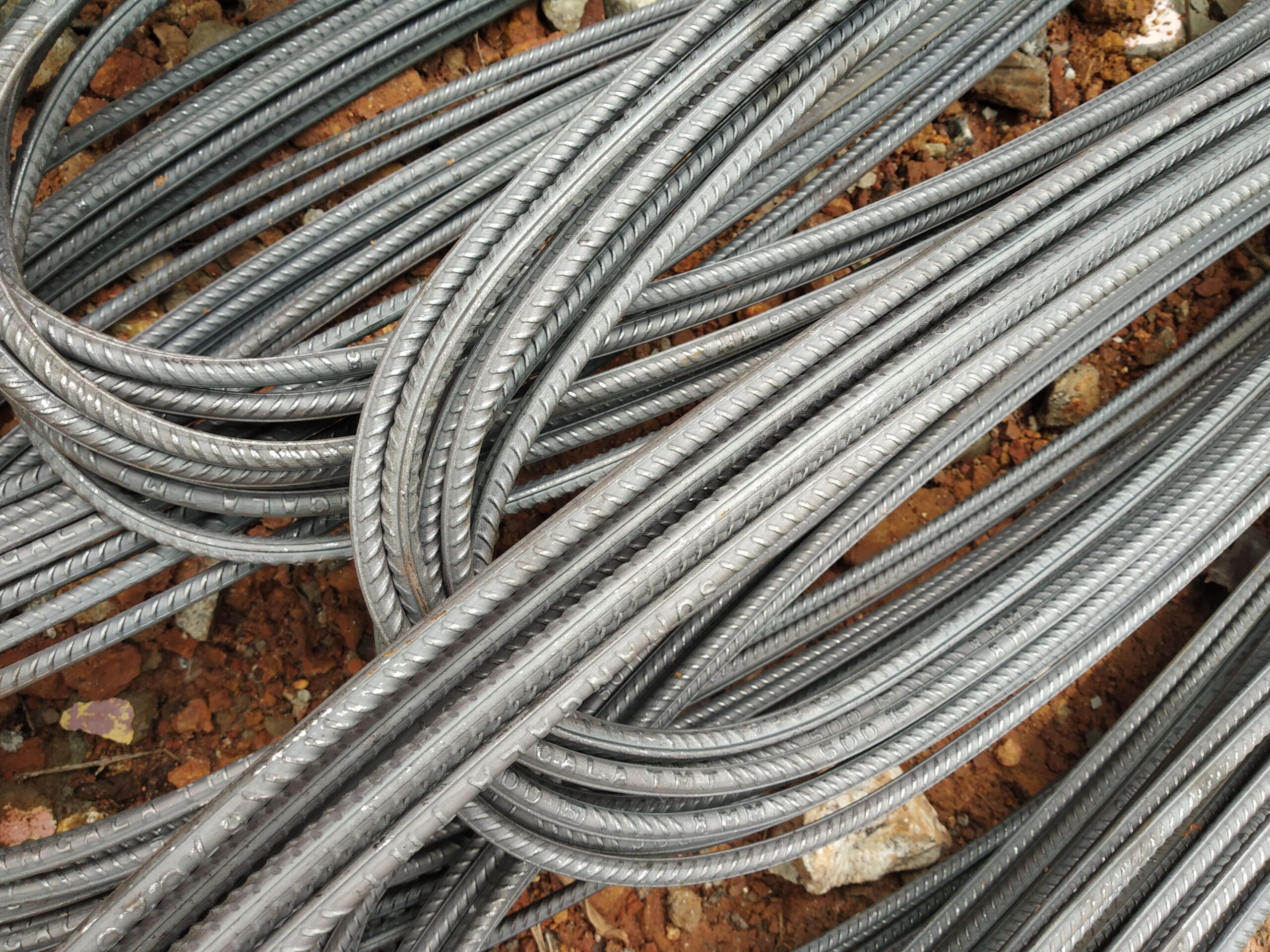
Steel Rebar Supply to Durban, South Africa
German-standard B500B reinforcing steel — DIN 488 / EN 10080 compliant — exported directly to Durban Port with full documentation including EN 10204 3.1 Mill Test Certificate and Certificate of Origin.
Rebar Durban: Why German-Standard Steel Matters for South African Projects
Durban is South Africa’s busiest port and one of the largest container terminals on the African continent. The city and surrounding KwaZulu-Natal province are experiencing sustained infrastructure investment — from port expansion and coastal residential developments to industrial logistics parks. For contractors and procurement teams managing these projects, sourcing reinforcing steel that meets verified technical standards is critical to structural performance, engineer approval, and project financing requirements.
Steel Rebar Germany supplies B500B hot-rolled deformed bars and associated rebar products manufactured to DIN 488 and EN 10080 — the German and European standards that define yield strength, ductility class, and ribbing geometry. B500B delivers a minimum yield strength of 500 MPa, a characteristic strength ratio k ≥ 1.08, and minimum uniform elongation Agt ≥ 5.0%, making it a high-ductility grade well suited to seismically considered structures, large-span infrastructure, and high-rise framing.
While South Africa’s own rebar standard (SANS 920) governs domestically produced steel, B500B’s technical parameters are comparable in terms of yield and ductility performance. Structural engineers reviewing imported steel for specific projects typically assess conformity on a project basis using the supplied Mill Test Certificate data. We provide EN 10204 3.1 inspection certificates from the producing mill — the highest level of material traceability available — which give engineers and checking authorities the full mechanical and chemical test results needed for approval.
Routing to Durban Port: Container and Break-Bulk Options
Durban’s port infrastructure supports both containerised and break-bulk steel shipments, giving buyers flexibility depending on order volume and downstream logistics.
- Containerised shipment: Straight bars (typically 6 m or 12 m stock lengths) are bundled into seaworthy packs of approximately 2 tonnes and loaded into 20-foot or 40-foot flat-rack or open-top containers. This suits smaller to mid-size orders and simplifies customs clearance and inland forwarding from Durban’s container terminal.
- Break-bulk / project cargo: For larger tonnages, break-bulk shipment via vessel call at Durban’s bulk terminal is available. Bundles are unitised and strapped to pallet-like cradles for crane offloading. This is cost-effective for major infrastructure contracts where volume justifies a dedicated cargo lot.
European origin ports with regular service toward Durban include Hamburg, Rotterdam, and Antwerp. Transit times to Durban typically range from 18 to 28 days depending on vessel rotation and transshipment points. We work with freight forwarders experienced in steel project cargo to coordinate pre-shipment inspection if required and to ensure documents reach the importer’s clearing agent in advance of vessel arrival.
Products Available for Export to Durban
Our export scope for Durban includes straight bars, mesh panels, coils, and mechanical couplers — all to German/EU standard.
B500B Straight Bars
Hot-rolled deformed bars in diameters 8–40 mm, stock lengths 6–18 m (commonly 12 m), ribbed to DIN 488 profile. Bundled in seaworthy 2 t packs with individual bar marking.
View B500B rebar →Rebar Coils (B500A/B500B)
6–16 mm coiled rod for site-based stirrup bending and mesh fabrication. Suitable for automated CNC stirrup machines commonly used on large Durban infrastructure sites.
View coils →Reinforcing Mesh Panels
Standard Q/R-type welded mesh and bespoke panels to DIN 488-4 for slabs, walls, and industrial flooring. Standard sheet size 6.0 × 2.3 m; custom sizing available.
View mesh →Mechanical Couplers
Parallel-thread and taper-thread rebar splices in diameters 12–40 mm. Eliminate lap-splice congestion in columns and walls — useful in high-rise and port structure applications.
View couplers →Cut & Bend Service
Bars cut and bent to drawing per DIN 488 shape codes or BS 8666 equivalents prior to shipment. Reduces on-site labour and waste for Durban projects with detailed BBS.
Cut & bend →Spacers & Accessories
DBV-standard concrete spacers, tying wire, and fixing accessories to complete the reinforcement supply package.
Accessories →Bar Size & Weight Reference — DIN 488 / EN 10080
The following table covers the full commercial range of diameters available for export. Cross-sections and unit weights are calculated per the standard formula: kg/m = d²(mm) × 0.00617.
| Diameter (mm) | Weight (kg/m) | Cross-section (mm²) |
|---|---|---|
| 8 | 0.395 | 50.3 |
| 10 | 0.617 | 78.5 |
| 12 | 0.888 | 113 |
| 14 | 1.21 | 154 |
| 16 | 1.58 | 201 |
| 20 | 2.47 | 314 |
| 25 | 3.85 | 491 |
| 32 | 6.31 | 804 |
| 40 | 9.86 | 1257 |
Export Documentation Package
Every shipment to Durban is supported by the following document set, which is prepared and dispatched to the importer’s clearing agent prior to vessel arrival:
- EN 10204 3.1 Mill Test Certificate (MTC): Issued by the producing mill, this certificate records heat number, chemical composition, and mechanical test results — yield strength, tensile strength, elongation (Agt), and bend test. It is the primary document for engineering review of imported steel.
- Certificate of Origin (CoO): EU/German origin certification confirming production provenance, required for South African customs and potentially relevant for preferential duty considerations under applicable trade frameworks.
- Commercial Invoice & Packing List: Full weight reconciliation by bundle and bar count, with HS code declaration.
- Bill of Lading: Negotiable or straight depending on payment terms, issued by the carrying line.
- CE Declaration of Performance (DoP): Available where CE marking applies, confirming conformity to EN 10080.
Frequently Asked Questions — Rebar Export to Durban
Can B500B rebar be used on South African projects that specify local SANS 920 standard?
What are the typical lead times for rebar delivery to Durban Port?
Is containerised or break-bulk shipment better for large Durban projects?
What diameters and lengths are available for export to South Africa?
Do you supply project-specific bar bending schedules (BBS) cut and bent before shipment?
Source German-standard rebar with full export documentation
Tell us your specification and destination port — we’ll respond with a detailed quotation.
