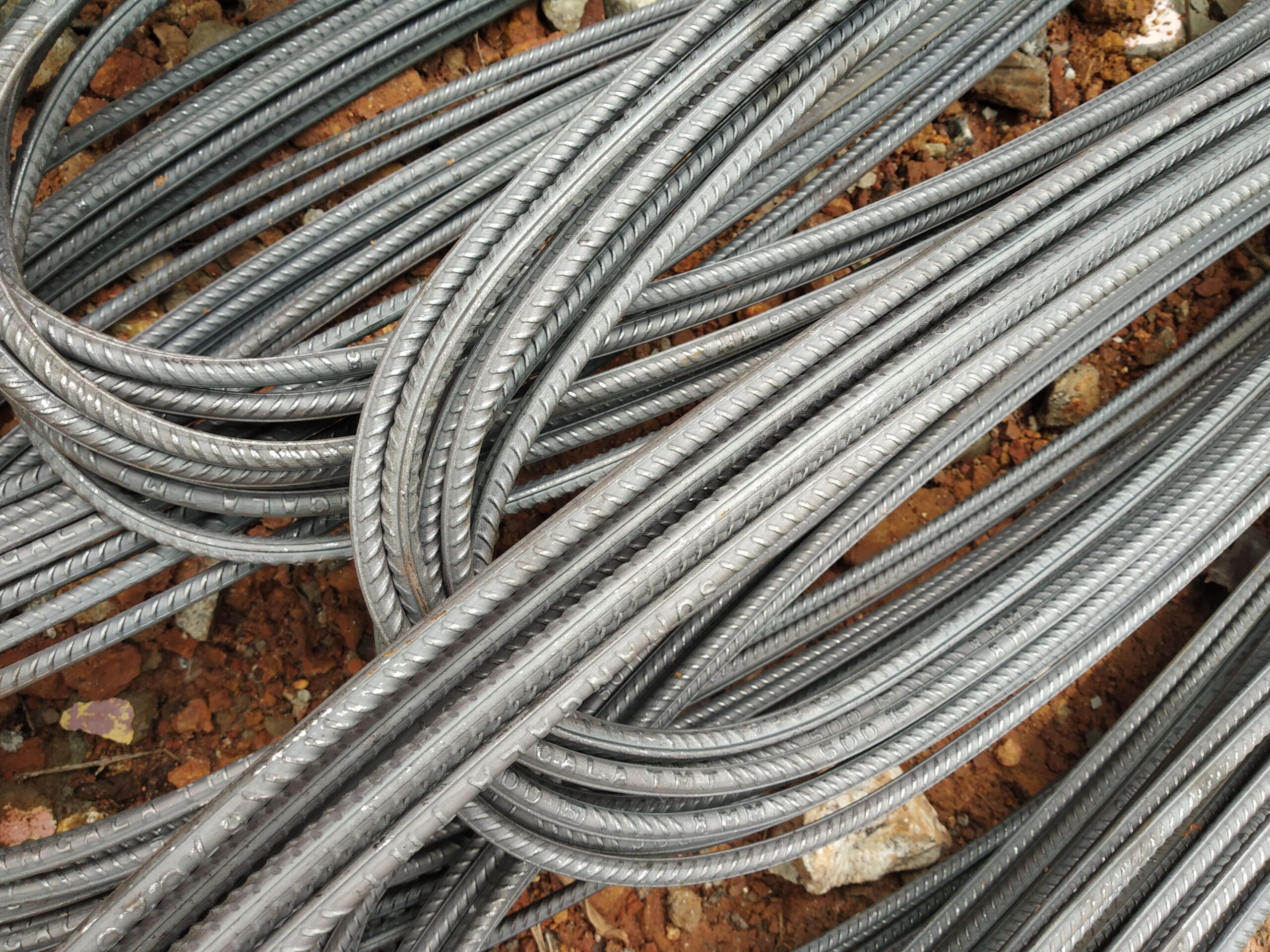
Steel Rebar Export to South Africa
Supplying B500B reinforcing steel to South African contractors and importers — EN 10080 / DIN 488 quality with full export documentation including EN 10204 3.1 Mill Test Certificates. Rebar South Africa projects deserve German-standard material.
Rebar South Africa: Market Context and Demand
South Africa’s construction sector is one of the most active on the African continent, driven by large-scale infrastructure programmes, residential densification in Gauteng and the Western Cape, and ongoing public investment in transport, water, and energy infrastructure. Demand for reinforcing steel — rebar South Africa buyers call it “rebar” or “re-bar” in project specs — remains substantial across civil engineering contractors, precast producers, and ready-mix concrete operations.
Local South African production exists, but project timelines, specification requirements, and supply constraints mean that international-grade rebar from established European mills is regularly sought for large tenders and specialised applications. German-origin B500B to EN 10080 is well-regarded for its dimensional consistency, high-ductility properties (characteristic strain at maximum force Agt ≥ 5.0 %, k-value ≥ 1.08), and full traceability via mill certification.
Standard Comparability: SANS 920 / SANS 1024 and EN 10080
South Africa’s primary reinforcing-steel standards are SANS 920 (steel bars for concrete reinforcement) and SANS 1024 (welded steel fabric). These standards define grades by yield strength — the most common commercial grade is 450 MPa and 500 MPa yield, structurally analogous to the EN 10080 B500 family.
Available Products for South African Buyers
We supply the following product ranges suitable for South African reinforced concrete construction:
- B500B deformed bars — diameters 8–40 mm, standard lengths 6–18 m (commonly 12 m), ribbed profile per EN 10080; full product details
- B500A rebar coils — 6–16 mm, for automated stirrup bending and mesh machines; rebar coils
- Welded reinforcing mesh — standard Q/R panels (e.g. 6.0 × 2.3 m) and bespoke sizes; mesh page
- Mechanical couplers — parallel-thread splices dia 12–40 mm, eliminating lap splice congestion; coupler details
- Cut and bend rebar — to DIN 488 shape codes or BS 8666 equivalent on request; cut and bend
Technical Reference: Weight and Cross-Section
The table below provides standard rebar weights and cross-sections (formula: kg/m = d² × 0.00617) for quick quantity estimation:
| Diameter (mm) | Weight (kg/m) | Cross-section (mm²) |
|---|---|---|
| 8 | 0.395 | 50.3 |
| 10 | 0.617 | 78.5 |
| 12 | 0.888 | 113 |
| 16 | 1.58 | 201 |
| 20 | 2.47 | 314 |
| 25 | 3.85 | 491 |
| 32 | 6.31 | 804 |
| 40 | 9.86 | 1257 |
Shipping & Export Documentation to South Africa
Full export documentation package provided with every South Africa shipment.
Shipping Mode
Rebar to South Africa ships primarily via containerised cargo into Durban (Port of Durban — the continent’s busiest) or Cape Town. Longer bars (over 12 m) or large bulk orders may move as break-bulk on general cargo vessels. We advise on the optimal mode based on your order volume and timeline.
Export Documentation
Standard documentation package includes: EN 10204 3.1 Mill Test Certificate (chemical analysis + mechanical test results), Certificate of Origin (Germany), commercial invoice, packing list, and Bill of Lading. HS code for deformed rebar bars: 7214 20. Additional SARS-ITAC import clearance documents supplied on request.
Seaworthy Packing
Rebar bundles are packed in seaworthy steel-strapped bundles of approximately 2 tonnes, tagged with heat number and diameter for full traceability. Bars are supplied with end caps and moisture protection where required. Mesh panels are palletised and stretch-wrapped. All packing meets standard container and break-bulk requirements for the South African import regime.
Why Source German Rebar for South Africa Projects?
German Mill Origin
Produced to DIN 488 and EN 10080 in certified German electric arc furnace (EAF) mills with stringent process controls and full heat traceability.
Full Certification
EN 10204 3.1 MTC issued by the producing mill — independent third-party inspection available on request for additional project assurance.
High Ductility B500B
Characteristic strain Agt ≥ 5.0 % and k ≥ 1.08 — exceeds minimum requirements for ductile structural design in seismic and high-load applications.
Export-Ready Logistics
Experienced in port-to-port documentation for African destinations. We coordinate freight forwarding, customs paperwork, and container booking.
Frequently Asked Questions — Rebar South Africa
Is German B500B rebar compatible with South African SANS 920 specifications?
Which South African ports does steel rebar export to?
What documentation is included with a rebar export to South Africa?
What is the minimum order quantity for a South Africa shipment?
Can you supply cut-and-bend rebar for South African projects?
Source German-standard rebar with full export documentation
Tell us your specification and destination port — we’ll respond with a detailed quotation for your South Africa rebar project.
