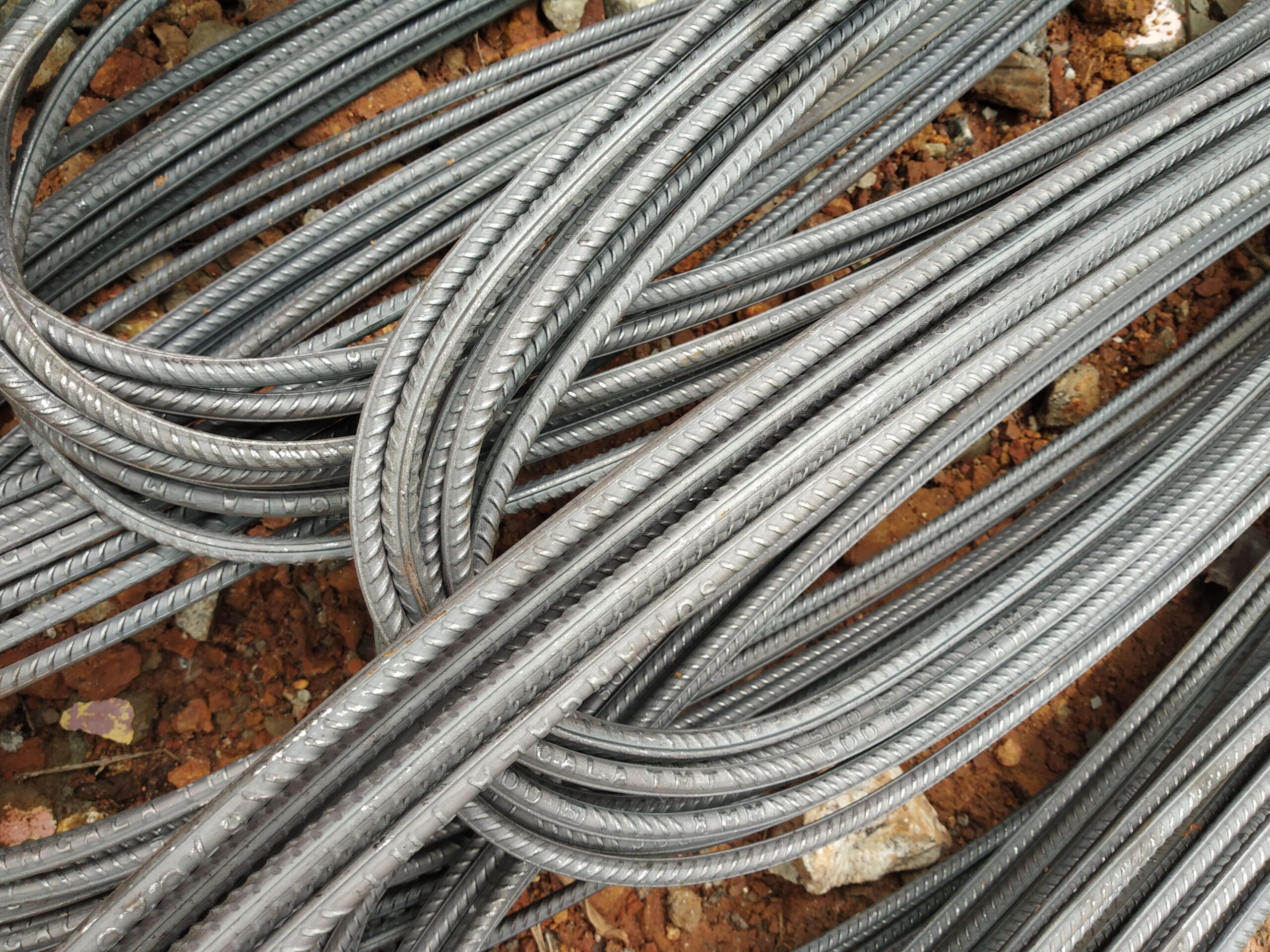
Steel Rebar Export to Austria
Supplying rebar Austria construction projects with EN 10080 / ÖNORM-compatible B500B reinforcing steel from Germany — technically comparable to Austrian B550 and B500 grades, with full EN 10204 3.1 Mill Test Certificates and intra-EU logistics via Hamburg or Koper.
Reinforcing Steel for Austrian Construction — Market Context
Austria is a landlocked EU member state sharing a direct land border with Germany, making it one of the most straightforward markets for German rebar export. Construction design follows Eurocode 2 (EN 1992-1-1), and reinforcing steel is specified under EN 10080 with additional national requirements historically captured in ÖNORM B 4706.
Austrian practice has used local grade designations such as B550A and B550B (550 MPa yield) alongside the European B500B. Our German-produced B500B to EN 10080 is technically comparable to the B500 category under Austrian standards, with 500 MPa minimum yield, k ≥ 1.08 and Agt ≥ 5.0%. Buyers procuring to a 550 MPa specification should confirm the required grade at the quotation stage.
As an intra-EU shipment, no customs formalities apply — goods move freely under EU single market rules. This simplifies procurement timelines and eliminates customs duties and associated documentation burdens compared with export to non-EU countries.
Technical Comparability — EN 10080 / ÖNORM and Austrian Practice
The Austrian national standard ÖNORM B 4706 specifies steel grades for reinforced concrete, with B550B being the high-ductility workhorse grade (550 MPa yield, k ≥ 1.08, Agt ≥ 5.0%). Our B500B shares the ductility class B parameters and geometric requirements but at the European standard 500 MPa yield level rather than the higher Austrian 550 MPa.
For projects specifying EN 10080 B500B explicitly (increasingly common on internationally tendered Austrian projects), our material is a direct match. For projects specifying ÖNORM B550B or B550A, buyers should seek structural engineer sign-off on the grade substitution.
B500B Product Reference — Diameters for Austrian Projects
| Diameter (mm) | Weight (kg/m) | Cross-section (mm²) | Typical application |
|---|---|---|---|
| 10 | 0.617 | 78.5 | Light slabs, distribution bars |
| 12 | 0.888 | 113 | Residential slabs, beams |
| 16 | 1.58 | 201 | Columns, retaining walls |
| 20 | 2.47 | 314 | Structural frames |
| 25 | 3.85 | 491 | Foundation piles |
| 32 | 6.31 | 804 | Infrastructure, bridges |
Logistics to Austria — Landlocked Routing
Direct road freight from Germany or multimodal via Hamburg and Koper.
Direct Road from Germany
Austria’s land border with Germany allows direct road freight without customs stops. From southern Germany dispatch points to Vienna, Graz or Linz, transit is typically 1–2 days. We can quote DAP (Delivered at Place) or FCA (Free Carrier) Incoterms.
Sea via Hamburg or Koper
For large volumes, seaborne delivery via Hamburg (North Sea route, then road) or Koper (Adriatic, Slovenia) provides cost-effective bulk transport. Koper is frequently used for Austrian project sites in Styria and Carinthia.
Rail Freight Option
Germany-Austria rail freight is well established. For large, time-insensitive consignments, rail flat wagons carrying rebar bundles offer an efficient alternative to road. Discuss rail options in your enquiry if relevant.
Documentation for Intra-EU Delivery to Austria
Intra-EU shipments are simpler than third-country exports. We provide:
- EN 10204 Type 3.1 Mill Test Certificate — the primary conformity document for structural projects
- CE Declaration of Performance (DoP) — issued under the Construction Products Regulation (CPR), referencing EN 10080
- Commercial Invoice & Packing List — for transport and accounting purposes
- CMR Waybill — for road transport, serving as the carrier’s receipt and delivery confirmation
No Certificate of Origin or customs entry is required for intra-EU trade. Austrian VAT rules apply on the buyer’s side (reverse charge for B2B intra-EU). See Export & Delivery and Standards & Certification for full detail.
Frequently Asked Questions — Rebar Export to Austria
What is the difference between German B500B and Austrian B550B?
Are there customs duties on rebar shipped from Germany to Austria?
What is the typical road transit time from Germany to Vienna or Graz?
Do you supply cut-and-bend rebar for Austrian projects?
Can you supply welded reinforcing mesh for Austrian floor slabs?
Source German-standard rebar with full export documentation
Tell us your specification and destination port — we’ll respond with a detailed quotation.
