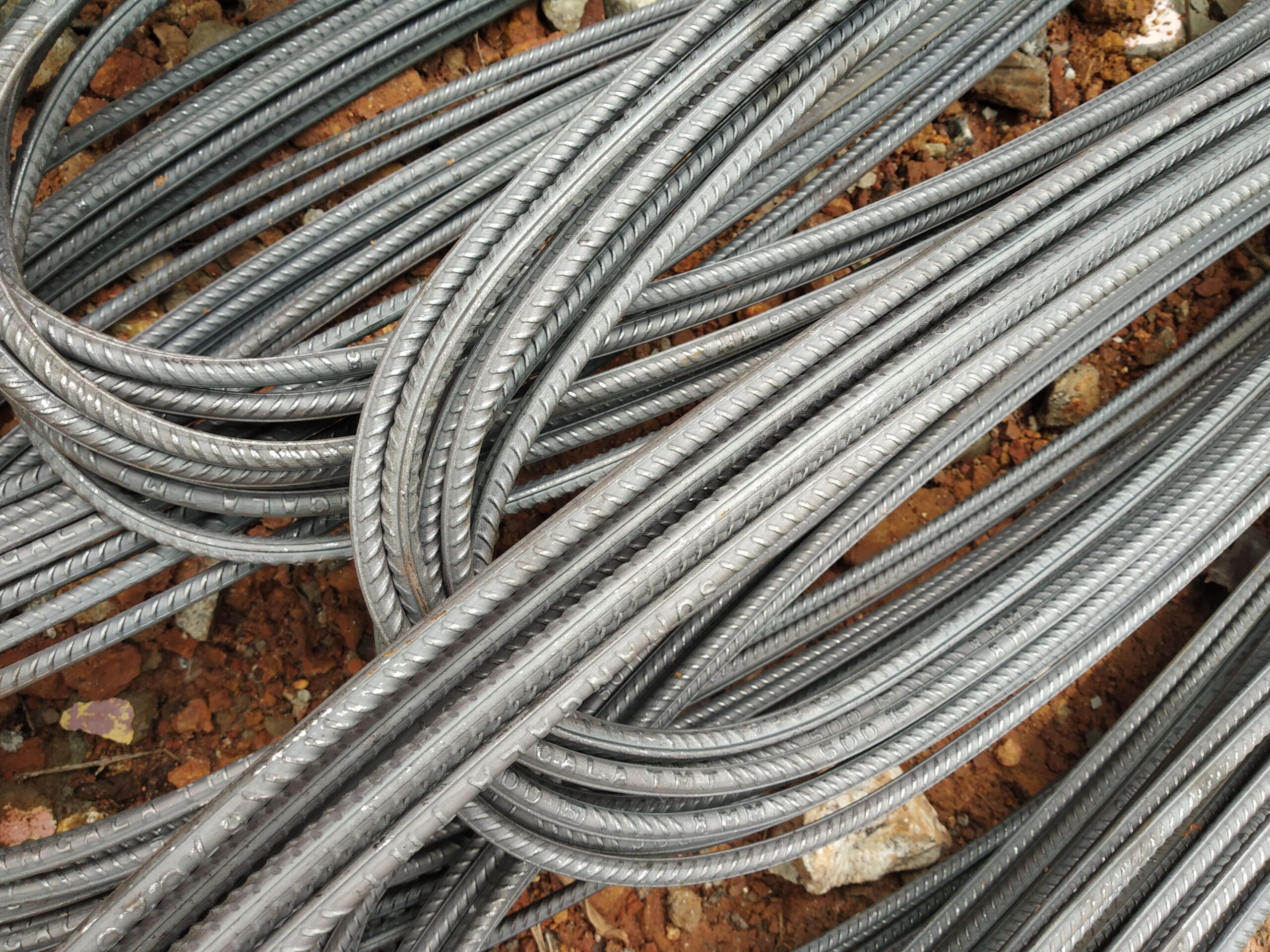
Steel Rebar Export to Latvia
Supplying rebar Latvia projects with B500B reinforcing steel from Germany — EN 10080 compliant, CE-marked, routed via Riga and Ventspils, with full Mill Test Certificate and intra-EU free movement.
Rebar Latvia: EN 10080 B500B and the Latvian Construction Sector
Latvia is an EU member state with an active construction market driven by significant investment in housing, transport infrastructure, and energy projects. Latvian structural engineers design reinforced concrete structures to Eurocode 2 (EN 1992-1-1) with the national annex, which calls out EN 10080 as the reinforcing steel standard. B500B — minimum yield 500 MPa, characteristic strain at maximum force Agt ≥ 5.0 %, strength ratio k ≥ 1.08 — is the standard structural grade aligned with this design framework.
German rebar produced under DIN 488 is the national transposition of EN 10080. The product carries CE marking under the Construction Products Regulation, meaning it can be placed directly on the Latvian market without further national type-approval. An EN 10204 3.1 Mill Test Certificate accompanies every shipment, providing the independently-certified test data that project engineers, main contractors, and site inspection bodies typically require for materials acceptance.
As an intra-EU trade corridor, the Germany-to-Latvia supply chain benefits from zero import duty, no anti-dumping measures on EU-origin steel, and no quota limitations — distinct practical advantages over sourcing from non-EU origins where all of these may apply.
Logistics Routing via Riga and Ventspils
Latvia has two principal commercial ports capable of handling steel cargo. Riga Freeport (Rīgas brīvosta) is the largest port in the Baltic states and includes specialised terminal facilities for handling bulk and break-bulk cargo including steel products. Its location at the mouth of the Daugava River gives it direct rail and road connections to Riga city and the wider Latvian road network.
Ventspils, on the western coast of Latvia, is another major commercial port with deep-water berths suitable for larger vessels and direct rail connections via the Latvian national rail network. It is particularly convenient for projects in western Latvia and serves as a transit hub for goods destined further east.
Short-sea services from German Baltic ports connect to both Riga and Ventspils with established freight routes. Road transport via the Via Baltica corridor (E67) offers direct truck routing with a transit time typically around one to two days from German supply points to Riga. We coordinate delivery on FCA, CFR, DAP, or other Incoterms to suit the buyer’s logistics arrangement.
B500B Bar Sizes — Standard Supply Range
Available diameters and weights for Latvian construction and engineering projects.
| Diameter (mm) | Weight (kg/m) | Cross-Section (mm²) | Application |
|---|---|---|---|
| 8 | 0.395 | 50.3 | Stirrups, light slabs |
| 10 | 0.617 | 78.5 | Slabs, secondary reinforcement |
| 12 | 0.888 | 113 | General structural reinforcement |
| 16 | 1.58 | 201 | Beams, columns, walls |
| 20 | 2.47 | 314 | Heavy structural frames |
| 25 | 3.85 | 491 | Foundations, bridge piers |
| 32 | 6.31 | 804 | Large-section structural elements |
Stock lengths: 6 m, 12 m, 18 m. Cut-and-bend available to DIN 488 shape codes. Coils (B500A/B500B, 6–16 mm) for stirrup and mesh machine fabrication.
Export Documentation for Latvian Deliveries
Standard documentation for intra-EU deliveries to Latvia includes:
- Mill Test Certificate EN 10204 3.1 — heat-specific certified test values for mechanical properties (Rp0.2, Rm, Agt) and chemical composition.
- CE Declaration of Performance (DoP) — references EN 10080 as the harmonised standard, confirming CE marking and the scope of the notified body’s assessment.
- Packing List / Delivery Note — bundle reference, heat number, diameter, length, piece count, and weight per bundle for site traceability.
- Certificate of Origin — confirming German production for project-owner or financial institution requirements.
- CMR / Bill of Lading — road or sea transport document as applicable.
All documents provided in English. Latvian-language versions of key documents can be arranged on request. See our Export & Delivery and Standards & Certification pages for full process detail, and the B500B product page for grade specification.
Intra-EU Trade: Practical Advantages
The EU single market removes the friction that makes sourcing from non-EU origins costly and complex. When procuring rebar from Germany for a Latvian project, there is no import duty at the Latvian border, no anti-dumping investigation exposure, no import licence requirement, and no mandatory inspection by a Latvian customs or standards authority. The CE marking document (DoP) together with the EN 10204 3.1 MTC constitutes the complete technical and traceability package — the same package used on construction sites across all 27 EU member states.
For international buyers and traders procuring for Latvian projects, this also simplifies financing and insurance, since the goods move under EU-standard commercial terms without the foreign-exchange and regulatory risk associated with non-EU origin steel.
Key Supply Benefits for Latvia
Zero Import Duty
Intra-EU shipment free of customs duty, anti-dumping, and quota. CE-marked product directly placeable on the Latvian market.
Riga & Ventspils Access
Short-sea and road routing to Latvia’s main commercial ports, with direct rail and road onward connections across the country.
Full Documentation Chain
EN 10204 3.1 MTC + CE DoP + delivery note — the complete materials acceptance package for Eurocode 2-designed projects.
Eurocode 2 Grade
B500B meets all ductility class B requirements of EN 1992-1-1, directly applicable with the Latvian National Annex.
Cut & Bend Available
Processed rebar to DIN 488 shape codes available — site-ready reinforcement reduces waste and placement time.
Full Product Range
Straight bars, coils, mesh, couplers and accessories — consolidated supply to cover the full reinforcement schedule.
View Products →Frequently Asked Questions — Rebar Export to Latvia
Is German B500B rebar accepted on Latvian construction sites without re-testing?
Which ports handle rebar deliveries to Latvia?
Are there import duties on rebar from Germany to Latvia?
What documentation do Latvian project owners typically require?
Can I order a mixed consignment of bars, coils, and mesh for a Latvian project?
Source German-standard rebar with full export documentation
Tell us your specification and destination port — we’ll respond with a detailed quotation for your Latvian project.
