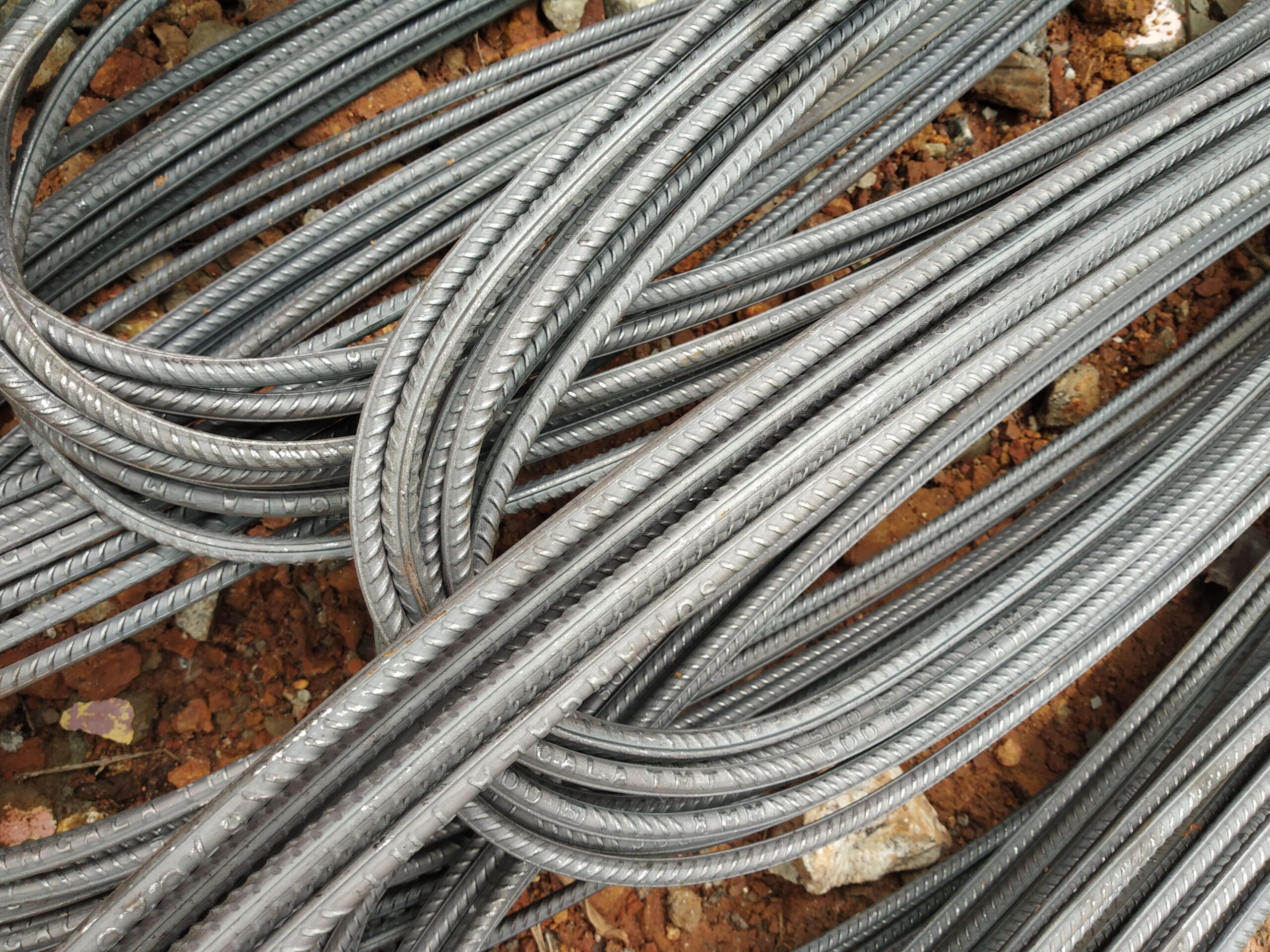
Steel Rebar Export to New Zealand
B500B reinforcing steel to EN 10080 — exported from Germany with full Mill Test Certificate 3.1, Certificate of Origin, and seaworthy bundles for New Zealand construction and infrastructure. Seismic-grade ductility is a critical local requirement — we supply B500C for 500E-equivalent applications.
Rebar New Zealand: Seismic Ductility and the 500E Requirement
New Zealand sits on the Pacific Ring of Fire and experiences significant seismic activity across both the North and South Islands. This geological reality shapes every aspect of structural design in the country: the New Zealand Building Code (NZBC) mandates compliance with NZS 1170.5 (Structural Design Actions — Earthquake) for most structures, and reinforcing steel must meet the demanding seismic ductility requirements of AS/NZS 4671.
The key grade for New Zealand seismic design is Grade 500E — 500 MPa minimum yield, Agt ≥ 10.0% (Class E, enhanced seismic ductility), k ≥ 1.15. This high elongation requirement distinguishes 500E from standard 500N rebar and makes it mandatory for primary structural elements in ductile and limited-ductile moment-resisting frames, shear walls, and coupled-wall systems throughout most of New Zealand’s urban areas.
Our standard B500B grade (EN 10080, Agt ≥ 5.0%) is technically comparable to AS/NZS 4671 Grade 500N. For 500E seismic applications, our B500C grade (Agt ≥ 7.5%, 1.15 ≤ k < 1.35) is the closest EN 10080 equivalent, though its Agt falls short of the 500E ≥ 10.0% requirement — structural engineers must assess acceptability for specific ductility demands. No AS/NZS Standards Mark licencing is claimed for any of our products. All comparisons are technical only; project acceptance rests with the licensed building practitioner and building consent authority.
Products for New Zealand Export
- B500B deformed bars — 8–40 mm, 6–18 m lengths. Suitable for non-seismic or nominally ductile applications. B500B details →
- B500C deformed bars — 500 MPa, Agt ≥ 7.5%, 1.15 ≤ k < 1.35. For seismic applications where engineer confirms acceptability vs. 500E. Contact us to enquire.
- Rebar coils (B500A/B500B) — 6–16 mm for prefab stirrups and mesh. Rebar coils →
- Welded mesh — standard Q/R panels and bespoke sizes per DIN 488-4. Mesh panels →
- Mechanical couplers — parallel-thread, 12–40 mm. Particularly useful in congested seismic frames where lap-splice lengths become impractical. Couplers →
- Cut-and-bend rebar — to project bending schedules, DIN 488 shape codes or equivalent. Cut & Bend →
Auckland and Tauranga: New Zealand’s Primary Import Ports
Two ports handle the majority of New Zealand’s steel imports, serving different geographic markets.
Port of Auckland (Ports of Auckland)
New Zealand’s busiest container port by value. Located in central Auckland, serving the greater Auckland region — the country’s largest construction market. Home to Marsden Wharf and the Fergusson Container Terminal. Strong road distribution network to Northland, Waikato, and Bay of Plenty. Most European-origin container shipments arrive here via Singapore, Port Klang, or Tanjung Pelepas transhipment hubs.
Port of Tauranga
New Zealand’s largest port by cargo volume. Located in the Bay of Plenty, Tauranga handles significant steel import volumes. Well-positioned for distribution to Hamilton, Rotorua, Taupo, and the central North Island. Also serves as a gateway for South Island transhipment to Christchurch (Lyttelton), Nelson, and Dunedin.
Ocean freight from Northern Europe (Hamburg, Rotterdam, Bremerhaven) to New Zealand typically takes 28–38 days via transhipment at Asian hubs. Container options include 40-foot open-top containers for standard 12 m bar lengths, or flat-rack containers for oversized sections. We work with freight forwarders experienced in New Zealand biosecurity (MPI) requirements for seaworthy timber dunnage and packing materials.
Export Documentation for New Zealand
New Zealand customs (New Zealand Customs Service) and biosecurity (Ministry for Primary Industries — MPI) requirements apply to all imports. Our standard documentation package includes:
- EN 10204 3.1 Mill Test Certificate — full chemical and mechanical test data, heat/cast traceable, independently reviewed.
- Certificate of Origin — certifying German origin, supporting any applicable NZ–EU trade arrangement and tariff classification.
- Commercial invoice & packing list — HS code 7214 20 (deformed bars), bundle markings, weights and dimensions, cast numbers.
- Phytosanitary / biosecurity compliance — seaworthy steel bundles do not require phytosanitary certificates; timber dunnage, if used, is heat-treated (ISPM 15) and documented.
- Declaration of Performance (DoP) — CE marking per EU CPR 305/2011, available on request.
Frequently Asked Questions — Rebar Export to New Zealand
Why is Grade 500E mandatory in New Zealand and not just 500N?
Can EN 10080 B500C replace AS/NZS 4671 Grade 500E in New Zealand projects?
What is the transit time for rebar from Germany to New Zealand?
Are there biosecurity restrictions on steel rebar imports into New Zealand?
Can mechanical couplers help with seismic reinforcement detailing in New Zealand?
Source German-standard rebar with full export documentation
Tell us your specification and destination port — we’ll respond with a detailed quotation for your New Zealand project.
