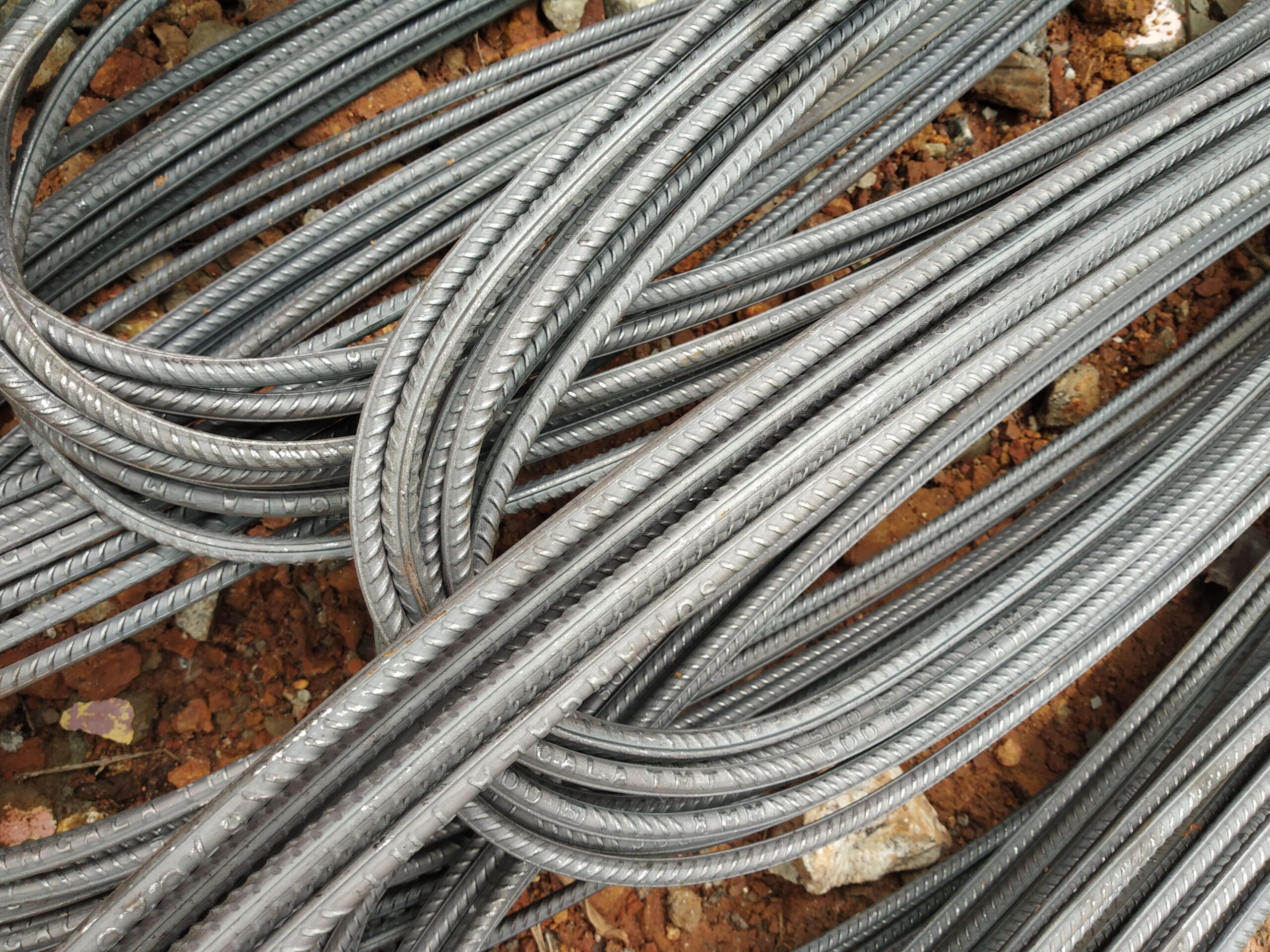
FOB Rebar Supply from Germany
FOB rebar supply from Germany puts DIN 488 / EN 10080 B500B reinforcing steel on board the vessel at a German or North European loading port — with all export formalities cleared, original EN 10204 3.1 Mill Test Certificates, and Certificate of Origin included. Risk and freight transfer to the buyer once the goods cross the ship’s rail.
What FOB Means for Rebar Buyers
Under Incoterms 2020 FOB (Free on Board), the seller — Steel Rebar Germany — delivers the reinforcing steel on board the vessel nominated by the buyer at the agreed loading port. Export customs clearance, export duties, and all costs up to and including loading are borne by the seller. Once the goods are on board, risk transfers to the buyer, who then arranges and pays for sea freight, marine insurance, and import clearance at the destination port.
FOB is commonly preferred by buyers who have established freight-forwarding relationships, who consolidate multiple commodity purchases in a single container, or who work with commodity trading structures that require FOB pricing for back-to-back sales. It gives the buyer maximum control over the ocean leg while relieving them of all pre-shipment logistics complexity.
FOB Rebar Supply: What Is Included
Steel Rebar Germany’s FOB rebar supply covers:
- Mill production to the agreed grade and diameter: B500B bars (8–40 mm), B500A coil (6–16 mm), mesh per DIN 488-4, or cut-and-bent shapes to BS 8666 / DIN 488 codes
- Third-party inspection and issuance of EN 10204 3.1 Mill Test Certificates — recording heat number, chemical composition, ReH (≥ 500 MPa for B500B), k-value (≥ 1.08), and Agt (≥ 5.0%)
- Seaworthy packing: approximately 2-tonne bundles, wire-bound, with dunnage; bundled for container (20 ft or 40 ft) or break-bulk vessel
- Export customs clearance from Germany, including EUR.1 Certificate of Origin for preferential customs treatment in destination countries with EU trade agreements
- Delivery to the loading port and loading on board the buyer’s nominated vessel
- Provision of shipping documents: packing list, commercial invoice, MTC originals, CoO — handed over at the point of loading
FOB vs. Other Incoterms for Steel
Choosing the right Incoterm affects cost, risk allocation, and documentation requirements.
| Incoterm | Seller’s Responsibility | Buyer’s Responsibility | Typical Use |
|---|---|---|---|
| FOB | Export clearance + load on vessel | Sea freight, insurance, import | Buyers with own freight arrangements |
| CIF | Export + freight + insurance to port | Import clearance + inland delivery | Buyers preferring delivered-to-port pricing |
| CFR | Export + sea freight to port | Insurance + import + inland | Buyers who self-insure |
| EXW | Make available at works | All transport, export, import | Buyers with full logistics control |
| DAP | All to named place (unloaded) | Import duties only | Buyers wanting door-to-site delivery |
We supply rebar on FOB, CIF, CFR, and EXW terms. See our CIF rebar supply page for buyers who prefer cost, insurance, and freight included to destination port.
Loading Ports for FOB Rebar from Germany
Hamburg (HHG)
Germany’s primary deep-sea container port. Extensive weekly services to all major global trades — Middle East, East Africa, South-East Asia, Americas.
Bremen / Bremerhaven
Flexible container and break-bulk facilities well-suited to heavy steel cargoes, with direct services to West Africa and the Atlantic trades.
Antwerp / Rotterdam
North European hub ports accessible from Germany by inland barge or road; offer the widest range of carrier options for FOB steel cargo.
Frequently Asked Questions — FOB Rebar Supply from Germany
What documents are provided under FOB rebar supply?
Can I nominate any vessel or freight forwarder?
Is marine insurance included in FOB pricing?
What grades and diameters are available FOB?
How is FOB price quoted — per tonne or per kg?
Source German-standard rebar with full export documentation
Tell us your specification and destination port — we’ll respond with a detailed quotation.
