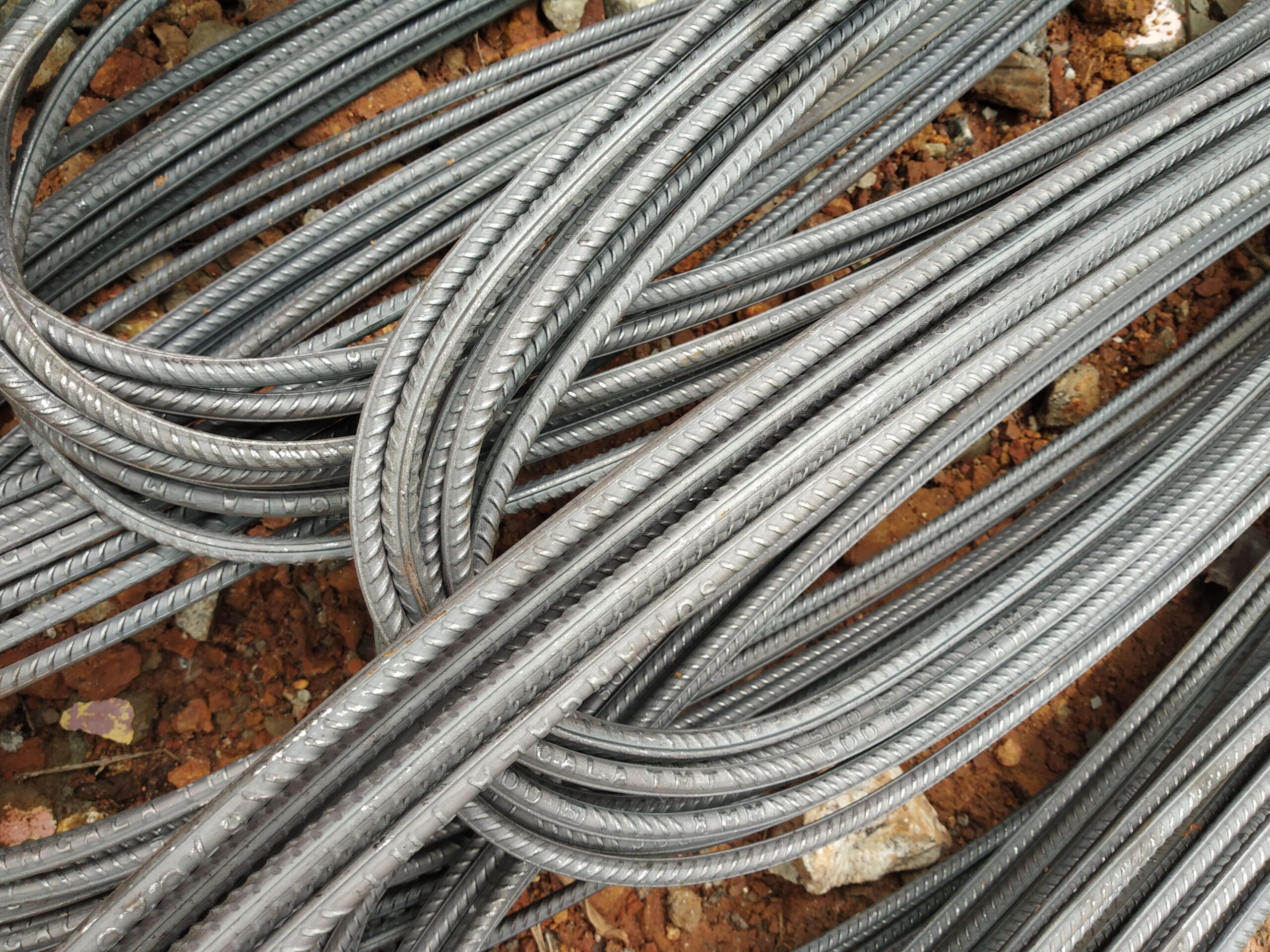
Rebar Fabrication & Fixing Supply
Rebar fabrication & fixing supply delivers cut, bent, and scheduled DIN 488 / EN 10080 reinforcing steel — shaped to exact bar mark schedules, tagged by pour, and accompanied by EN 10204 3.1 Mill Test Certificates — removing on-site cutting waste and accelerating the fixing cycle for international construction projects.
What Rebar Fabrication & Fixing Supply Covers
Rebar fabrication supply — sometimes called processed or scheduled reinforcement supply — refers to the provision of reinforcing steel that has been cut and bent to the exact shapes and dimensions specified in a bending schedule, ready for placement by fixers on site without further cutting or bending. The term “fixing supply” reflects the additional service layer of organising and labelling each bundle by bar mark, pour, and lift so that the fixing gang can draw materials in the exact sequence required by the construction programme.
For export projects, fabricated supply from Germany offers a significant advantage: bending machines at German fabricators operate to DIN 488 bend radius and shape-code tolerances, which are broadly equivalent to BS 8666 (the UK standard widely used on international projects) and compatible with EN 1992-1-1 / Eurocode 2 design. Buyers can submit schedules in BS 8666 format or DIN 488 shape codes and receive fabricated reinforcement that meets the structural engineer’s specification without on-site rework.
Shape Codes and Bending Standards
Steel Rebar Germany processes fabricated reinforcement to the following bending standards:
- DIN 488 — the German national standard; defines minimum bend diameters for B500A and B500B, shape designations, and tolerances for scheduled bars
- BS 8666:2020 — the UK standard for scheduling, dimensioning, bending, and cutting of steel reinforcement; widely referenced on international projects designed by British or Commonwealth engineers
- EN 1992-1-1 (Eurocode 2) — the structural design standard that governs anchorage lengths and bend geometries for reinforced concrete in the EU and many export markets
Minimum mandrel diameters per DIN 488 for B500B: 4d for bars up to 16 mm; 7d for bars above 16 mm (where d = bar diameter). These are comparable with BS 8666 Table 2 values for high-yield bars.
Bending schedule submission should include: bar mark, shape code, bar diameter, total length, number of bars, and bend dimensions A through E as applicable. We can accept schedules in PDF, Excel (e.g. RebarCAD, CADS RC, Tekla), or CSV format.
Fabrication Supply: Key Diameter & Weight Reference
Bar weight per metre and cross-sectional area for B500B fabricated reinforcement, per the formula kg/m = d²(mm) × 0.00617.
| Diameter (mm) | Weight (kg/m) | Section Area (mm²) | Typical Fabricated Use |
|---|---|---|---|
| 8 | 0.395 | 50.3 | Links, stirrups, distribution bars |
| 10 | 0.617 | 78.5 | Links, secondary reinforcement |
| 12 | 0.888 | 113 | Stirrups, U-bars, cog bars |
| 16 | 1.58 | 201 | Main bars — beams, columns, walls |
| 20 | 2.47 | 314 | Main bars — foundations, columns |
| 25 | 3.85 | 491 | Heavy structural members |
| 32 | 6.31 | 804 | Piled foundations, transfer structures |
| 40 | 9.86 | 1257 | Large-diameter piles, caissons |
From Bar Schedule to Shipment: The Fabrication Supply Process
Submit Bar Schedule
Buyer provides bending schedule in BS 8666 or DIN 488 format, linked to a pour programme. We review for completeness and flag any ambiguous shape codes.
Confirmation & MTC Allocation
We confirm production lead time, allocate a mill heat lot to ensure consistent EN 10204 3.1 documentation, and issue an order acknowledgement.
Cut, Bend & Tag
Bars are cut and bent to schedule tolerances, tagged by bar mark and pour reference, bundled in seaworthy ~2 t bundles, and packed for container or break-bulk export.
Ship with Full Documentation
Shipment dispatched with original EN 10204 3.1 MTCs, Certificate of Origin, commercial invoice, packing list, and Bill of Lading per agreed Incoterm (FOB or CIF).
Related Products & Services
Rebar Stirrups & Cut-to-Length
Closed stirrups, open links, and cut-to-length bar for site or precast use — produced to DIN 488 bend tolerances in diameters 8–40 mm.
View product →Rebar Couplers
Parallel-thread and taper-thread mechanical splices for diameters 12–40 mm — a compact alternative to lap splices in congested zones or high-seismic areas.
View product →Export & Delivery
FOB, CIF, CFR, and EXW supply with seaworthy packing, export clearance, and full documentation. Worldwide port coverage.
Learn more →Frequently Asked Questions — Rebar Fabrication & Fixing Supply
What bending schedule format should I submit?
Are EN 10204 3.1 MTCs provided for fabricated reinforcement?
How are bundles labelled for on-site fixing?
What is the welding standard for fabricated rebar joints?
Can I combine fabricated bars, straight bars, and mesh in a single shipment?
Source German-standard rebar with full export documentation
Tell us your specification and destination port — we’ll respond with a detailed quotation.
