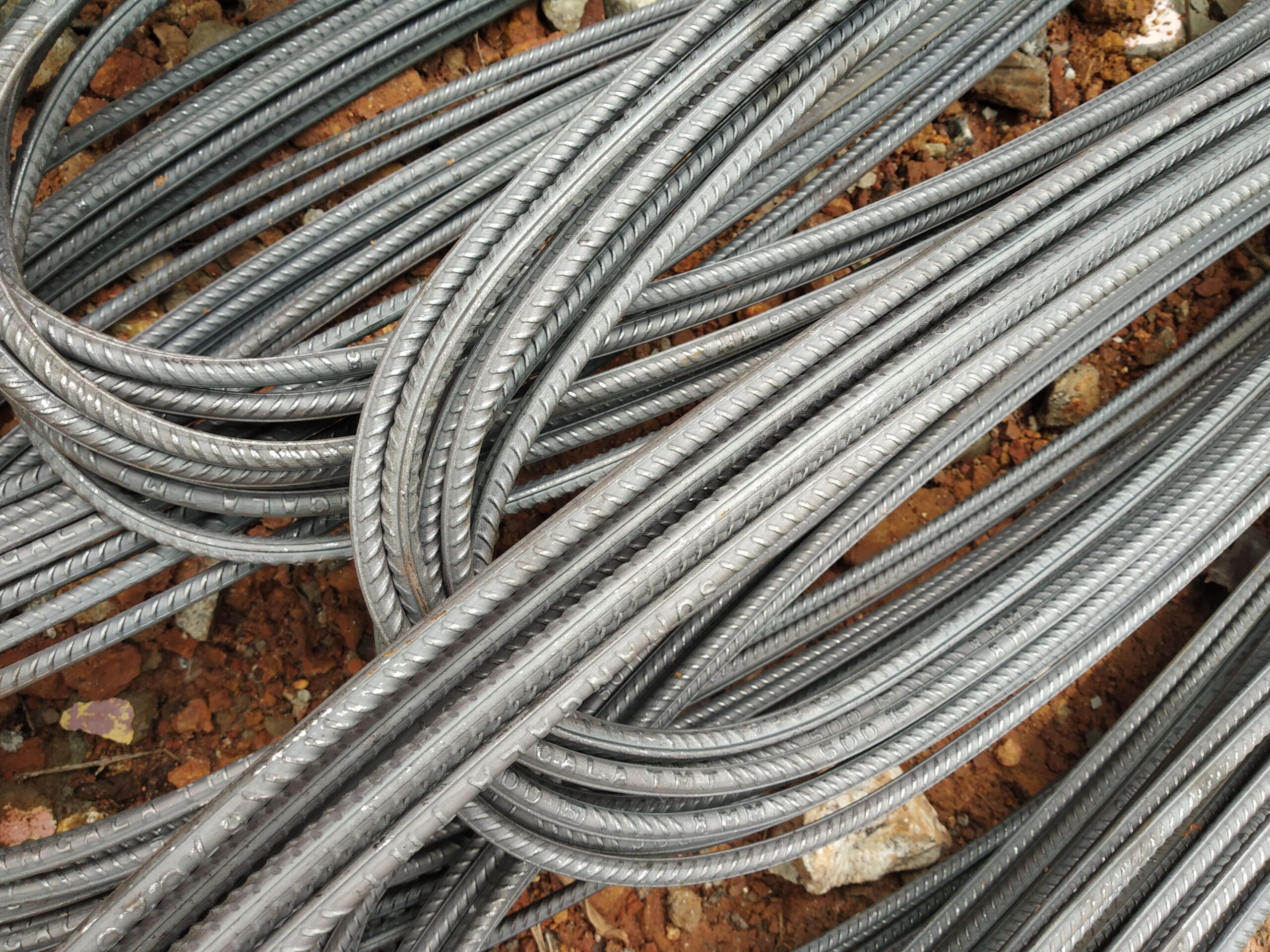
Rebar Stockholding & Buffer Stock
Secure uninterrupted construction programmes with dedicated rebar buffer stock held to your specification — B500B bars, mesh, coils — backed by EN 10204 3.1 Mill Test Certificates and call-off flexibility to match your site schedule.
What Is Rebar Stockholding & Buffer Stock?
Rebar stockholding — also called buffer stock or consignment stock — is the practice of holding a pre-agreed quantity of reinforcing steel at a nominated location, ready for immediate call-off as a construction project progresses. Rather than placing individual spot orders and waiting for mill lead times, the buyer reserves a defined tonnage in advance and draws against it in scheduled lifts aligned to the concreting programme.
For international projects, buffer stock arrangements are especially valuable. Mill-to-site lead times across export lanes (from Germany to ports in the Middle East, West Africa, or South-East Asia) typically span four to eight weeks including production, testing, documentation, and sea freight. Holding stock at an intermediate warehouse or at the project’s receiving port eliminates that variable, giving the site team certainty when they open a new pour cycle.
Materials Covered Under Stockholding Arrangements
Steel Rebar Germany can discuss buffer stock arrangements across its full product range, subject to agreed minimum quantities and call-off windows:
- B500B straight bars — the dominant export grade; diameters 8 mm through 40 mm; standard 12 m lengths or project-specified cuts
- B500B cut-and-bent reinforcement — shapes scheduled to BS 8666 or DIN 488 shape codes, tagged and bundled per pour
- B500A coil rebar — 6–16 mm, for on-site or local fabrication of stirrups and links
- Reinforcing steel mesh (Betonstahlmatten) — standard Q/R panels (e.g. 6.0 × 2.3 m) or bespoke sizes per DIN 488-4
- Lattice girders (Gitterträger) — for precast filigree slab programmes with repetitive lift schedules
Each consignment is accompanied by the full documentation package: EN 10204 3.1 Mill Test Certificate, Certificate of Origin (for customs preference), packing list, and CE/Declaration of Performance where applicable under CPR.
How a Buffer Stock Arrangement Works
A typical stockholding programme runs in three phases — reservation, replenishment, and documentation.
1. Specification & Reservation
Buyer submits a bar schedule or material take-off. We agree a buffer quantity (typically 2–4 weeks of site consumption), grade, diameter mix, and length. A reservation order is confirmed with Mill Test Certificate numbers.
2. Call-Off & Dispatch
As the site opens each pour sequence, a call-off instruction is issued — usually 5–10 working days ahead. Bundles are released from the buffer, loaded into seaworthy containers or break-bulk, and dispatched with original MTCs.
3. Replenishment
When the buffer drops to a trigger level, a replenishment order is placed to the mill. This rolling cycle keeps the buffer topped up throughout the project lifecycle without large single-payment spikes.
Key Advantages of Buffer Stock for Export Projects
Eliminates Lead-Time Risk
No dependency on spot-market availability or mill queue times mid-project.
Consistent Documentation
All steel from the same cast/heat lot; EN 10204 3.1 MTCs match for the full pour sequence.
Budget Visibility
Agreed pricing at reservation; no exposure to mid-project spot price swings.
Export-Ready Bundles
Seaworthy packing, approx. 2-tonne bundles; container or break-bulk to any port.
Documentation Included with Every Stockholding Shipment
DIN 488 and EN 10080 mandate third-party inspection and traceability. Every stockholding release from Steel Rebar Germany includes:
| Document | Standard / Basis | Purpose |
|---|---|---|
| Mill Test Certificate (MTC) | EN 10204 Type 3.1 | Chemical & mechanical test results per heat |
| Certificate of Origin | EUR.1 / Chamber of Commerce | Customs preference & import duty |
| Declaration of Performance (DoP) | EU CPR 305/2011 | CE marking traceability |
| Packing List | Project-specific | Bundle count, weights, dimensions |
| Bill of Lading / CMR | Freight carrier | Title & transport |
Frequently Asked Questions — Rebar Stockholding & Buffer Stock
What minimum quantity is typically required for a buffer stock arrangement?
Can the buffer stock be held in-country rather than in Germany?
Are EN 10204 3.1 Mill Test Certificates always provided?
What grades are available under stockholding?
How does buffer stock pricing compare to spot orders?
Source German-standard rebar with full export documentation
Tell us your specification and destination port — we’ll respond with a detailed quotation.
